
Introduction
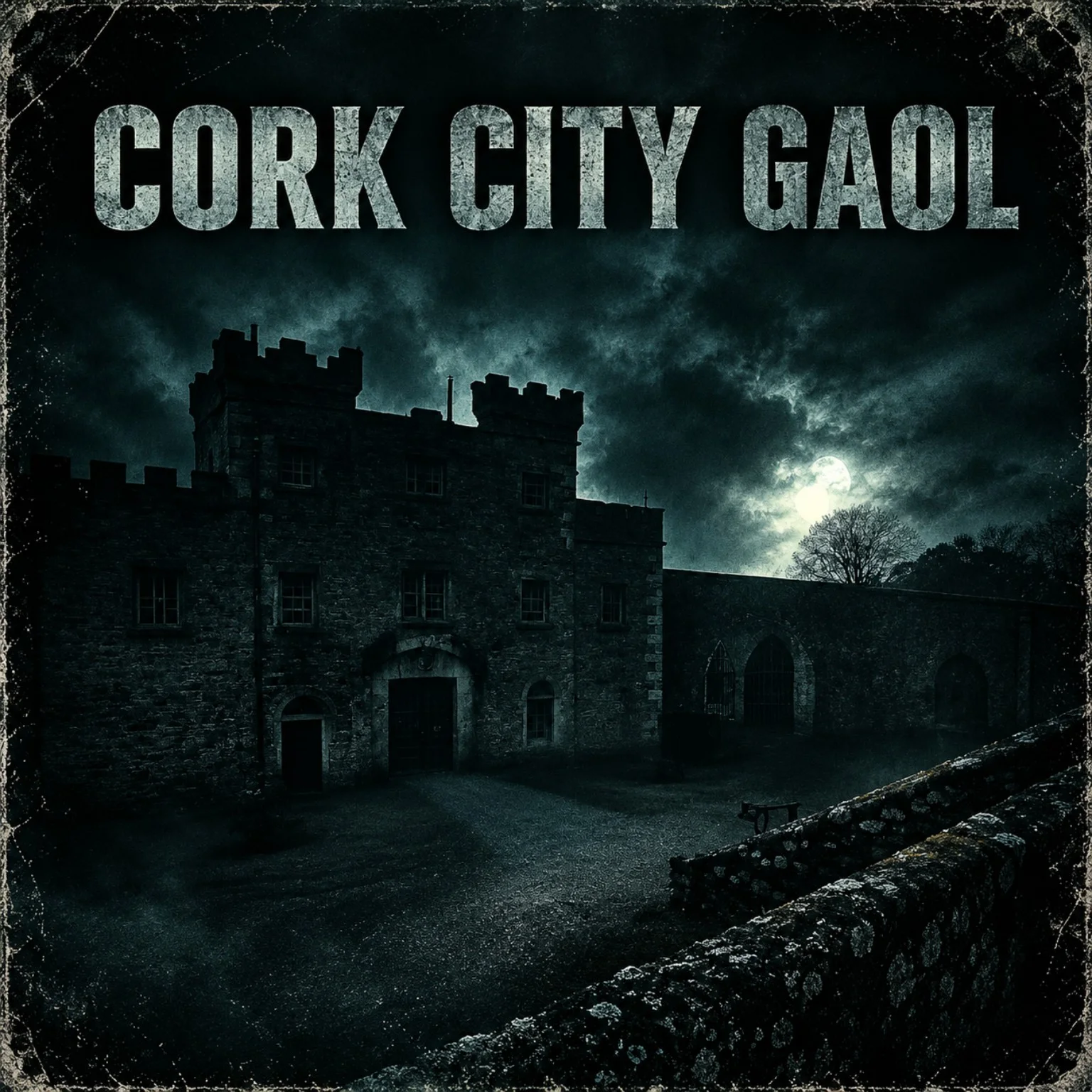
Rising above the River Lee on Sunday's Well, the imposing Gothic structure has overlooked Cork for more than two centuries. Thousands of prisoners passed through its gates, from petty criminals and famine-era offenders to political prisoners caught in Ireland's struggle for independence. Today, the gaol serves as a museum, but for many visitors, history does not feel confined to the exhibits. Stories of shadow figures, unexplained voices, and strange experiences continue to surround the old prison, adding another chapter to a history already shaped by suffering, resilience, and loss.
History: The Prison on the Hill
Construction of Cork City Gaol began in 1818 under renowned architect Sir Thomas Deane, and the prison welcomed its first inmates in 1824. Designed with imposing towers, battlements, and cut limestone walls, the building resembled a fortress as much as a prison. It was intended to replace Cork's older and overcrowded gaol while serving as a visible reminder of law and authority.
During the nineteenth century, the prison held men, women, and children. Many inmates found themselves behind bars for offences that today might seem minor, including theft, drunkenness, or unpaid debts. In 1878, the prison became an all-female institution, housing women from every level of society. Some were convicted criminals, while others were victims of poverty and circumstance whose lives had taken unfortunate turns.
The prison also became part of Ireland's political history. During the Irish Civil War in 1922 and 1923, Republican prisoners were held within its walls, including the writer Frank O'Connor. The gaol finally closed in August 1923, ending a chapter that had lasted more than a century.
Its story, however, was far from over.
Following its closure, parts of the building found a new purpose when radio broadcasting equipment was installed on the upper floors. Programmes and transmissions were sent across the region until the 1950s. Decades later, Cork City Gaol would be restored and reopened as a heritage attraction, allowing visitors to step back into a period of Irish history preserved within stone and iron.
Folklore: Voices in Empty Corridors
Many historic prisons develop a reputation for strange occurrences, and Cork City Gaol is no exception.
During restoration work in the early 1990s, workers began sharing stories of experiences they struggled to explain. Some reported hearing voices in parts of the building that should have been empty. Others spoke of tools appearing in places where they had not been left, or an uncomfortable feeling that someone was standing nearby despite no one being present.
As these stories circulated, the gaol's reputation began to change. Visitors arrived not only to learn about history but to experience a building increasingly associated with the unexplained.
One of the most frequently repeated accounts involves a staff member who reportedly heard a child softly call out "Daddy." Turning towards the sound, they witnessed a woman dressed in period clothing before she disappeared from sight. Other reports describe footsteps echoing through deserted corridors, doors opening unexpectedly, and shadows glimpsed at the edge of vision.
The prison's most famous apparition is often referred to as the Window Watcher, a dark figure seen standing motionless in the upper cell windows. Witnesses describe noticing the figure observing the grounds below, only for it to vanish moments later.
Whether viewed as ghost stories or local folklore, the accounts have become part of Cork City Gaol's modern identity.
Paranormal Aftermath: When the Past Feels Close
Since reopening as a museum in 1993, reports of unusual activity have continued.
Visitors regularly describe sudden cold spots appearing in otherwise comfortable rooms. Some claim to have felt an unexplained touch on the shoulder or the sensation that someone was walking just behind them. Others report hearing whispers, sighs, or movement from apparently empty sections of the prison.
Paranormal investigators have also spent time within the building, recording unexplained sounds and electronic disturbances. EVP sessions have reportedly captured faint voices and indistinct murmurs, while some investigators claim equipment functions erratically in older areas of the gaol.
Yet what stands out most about Cork City Gaol is not any single ghost story.
Its reputation comes from the thousands of lives that passed through its gates. The prisoner separated from their family. The woman imprisoned by circumstance. The political captive waiting for news from the outside world. The child who found themselves behind bars in a very different Ireland. The prison absorbed all of it, the fear, the loneliness, the resilience, and the regret.
Today, visitors arrive seeking history, but many leave speaking about atmosphere. There is a sense that the past feels unusually close here. Perhaps it is the sight of the empty cells, the worn stone staircases, or the stories attached to every corridor and doorway. Whatever the reason, Cork City Gaol has a way of making history feel personal rather than distant.
Whether that feeling is paranormal or simply the emotional weight of the building's past is impossible to say. What is certain is that Cork City Gaol remains far more than a museum. It stands as a reminder of the people who lived, suffered, and endured behind its walls, ensuring their stories continue to be remembered long after the cell doors closed for the final time.