
History
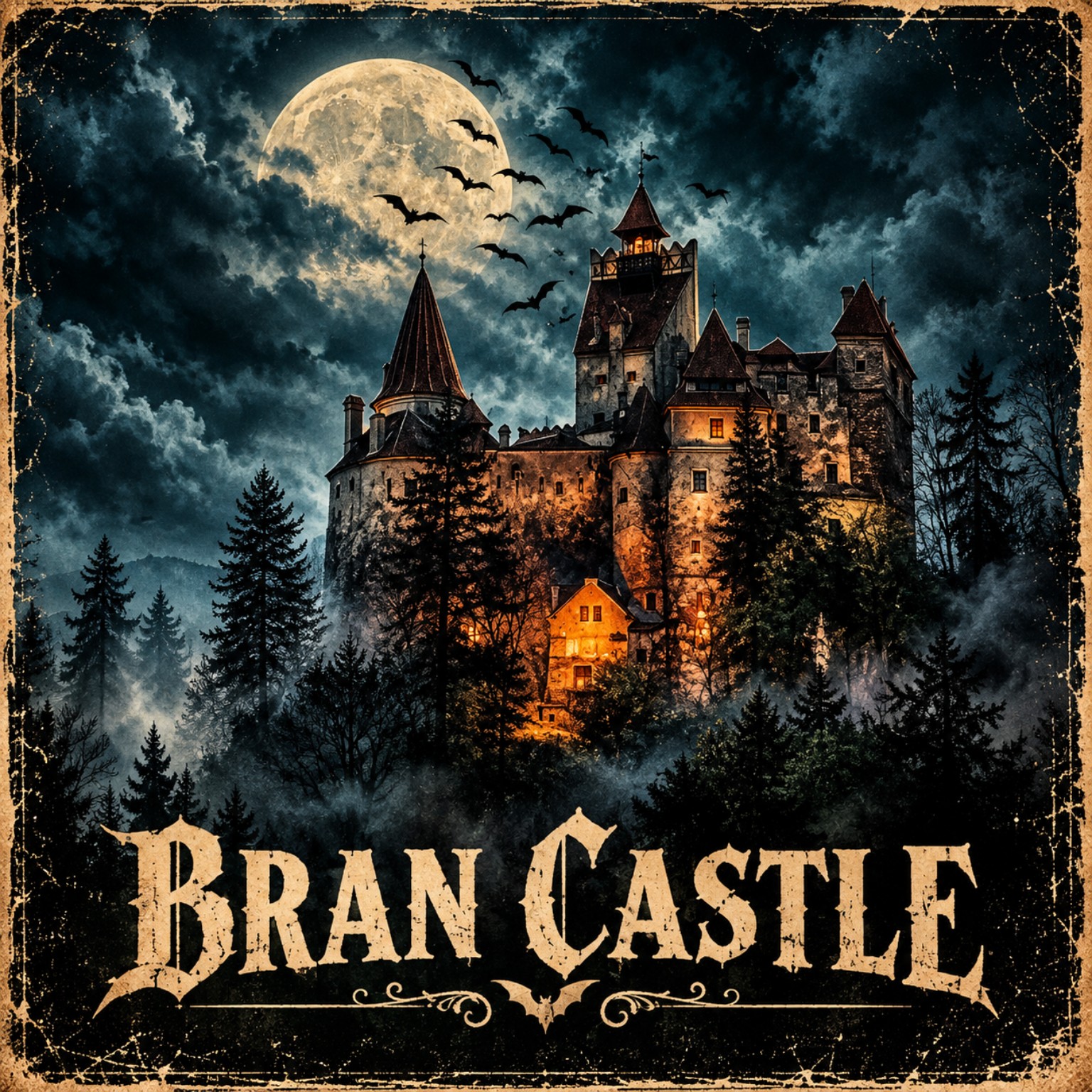
Bran Castle stands like a fang against the Transylvanian sky, perched on a rocky bluff near the town of Brașov. Its story begins in 1377, when King Louis I of Hungary granted the Saxons of Kronstadt (modern Brașov) the right to build a fortress here. The purpose was both practical and political: to guard a vital mountain pass through the Carpathians and to levy customs duties on merchants moving between Transylvania and Wallachia.
Throughout the centuries, Bran served as a stronghold, a customs house, and at times a royal residence. During the late Middle Ages it was a bulwark against Ottoman incursions, its position making it one of the most strategic fortifications in the region.
The castle also became entwined with Wallachian rulers, including fleeting associations with Vlad Țepeș, the historical “Dracula.” Though no records prove Vlad ever lived here, he did wage campaigns in the region and was briefly held prisoner in nearby Brașov. These thin threads of history were later woven by imagination into the myth of Dracula’s Castle. In reality, Bram Stoker never visited Transylvania; his descriptions in the 1897 novel Dracula were drawn from books, maps, and perhaps illustrations. Yet Bran’s Gothic silhouette fit the world’s imagination so perfectly that fiction and history fused, and Bran became the stage for the vampire’s legend.
Folklore & Legend
Legends cling to Bran’s stones as ivy clings to its walls. Beyond the shadow of Dracula, locals whisper of spirits that roam the castle’s halls.
One of the most enduring is the White Lady, a figure said to be the ghost of a noblewoman who met a tragic end within the castle. She is seen drifting along the corridors in moonlight, her sorrow palpable, her veil trailing in the darkness. Witnesses describe her presence as mournful rather than malevolent, an eternal lament echoing through the ages.
Then there is the tale of a monk entombed alive. Condemned for betrayal, or perhaps as punishment for some darker sin, he was walled into a chamber to perish in the stone. His anguished whispers are said to echo through the castle still, especially in the quieter hours of dusk and dawn.
Bran’s very architecture feeds its folklore: narrow staircases that twist like secrets, hidden chambers, and battlements that overlook valleys once soaked in blood. The castle’s association with Vlad the Impaler, however tenuous, and its later branding as Dracula’s Castle stitched it firmly into global imagination. For tourists and storytellers alike, Bran became more than a fortress: it became a living Gothic novel.
Paranormal legacy
Those who visit Bran often leave with more than photographs. Accounts abound of phantom footsteps trailing behind in empty corridors, of sudden icy drafts sweeping through sealed rooms, and of an oppressive silence that falls as though the walls themselves are listening.
Ghost hunters and paranormal teams claim to capture greenish mist coiling in the underground tunnels, unexplained knocks in the towers, and whispers on EVP recordings. Visitors report that technology falters inside the castle — batteries draining in moments, cameras refusing to capture images, and phones freezing when entering certain chambers.
On the ramparts, many describe a sensation of being watched — a heavy, piercing gaze from unseen eyes. Others claim to feel a hand brush their shoulder, only to turn and find the passageway empty. The White Lady is said to appear most often on stormy nights, her figure half-formed in the flicker of lightning.
Bran Castle is no simple museum. It is a theater where history and legend perform together, a fortress that still breathes with stories of sorrow, betrayal, and the supernatural. Whether drawn by fact, folklore, or the specter of Dracula himself, visitors leave with the same conclusion: the castle is haunted not only by ghosts, but by the weight of centuries.