
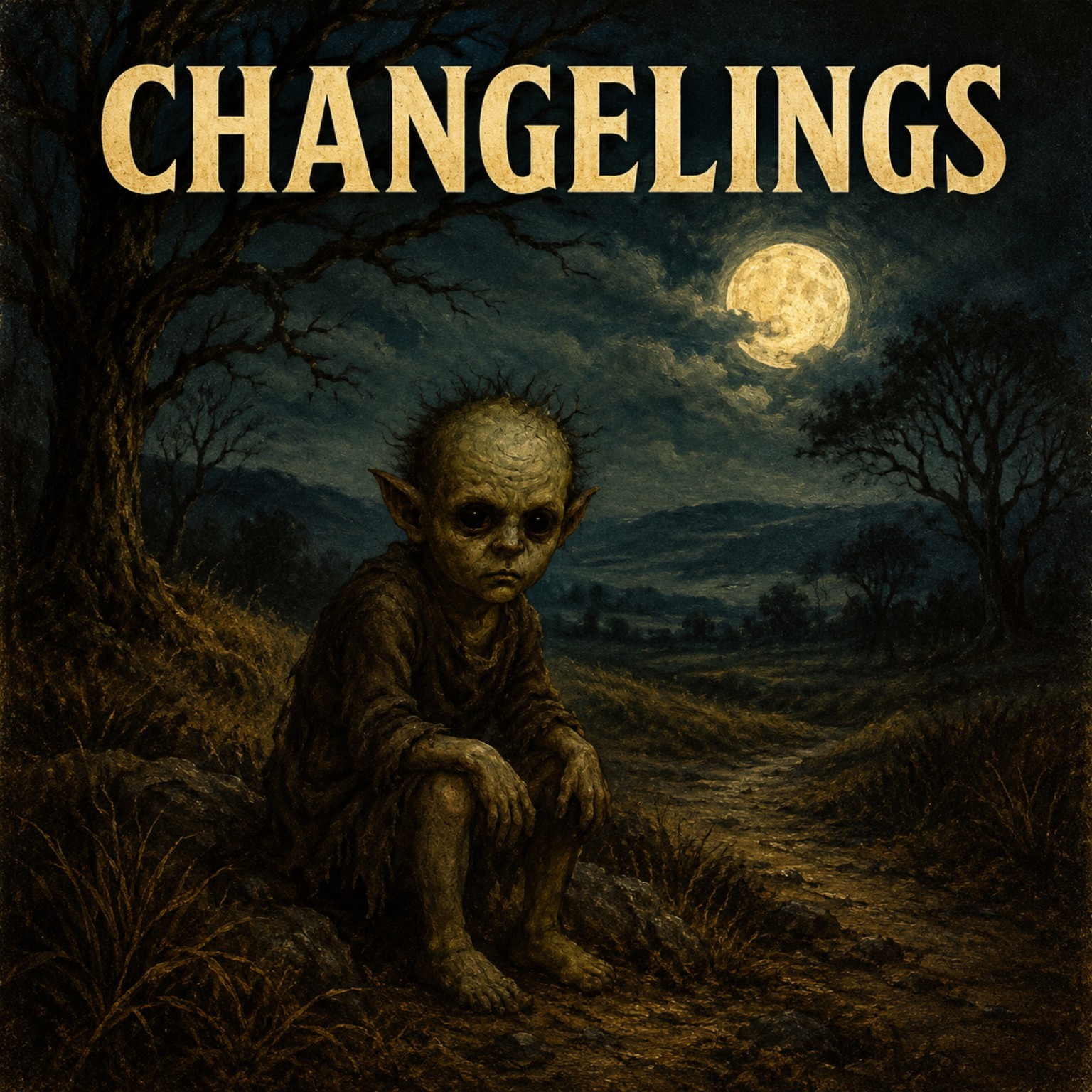
There is a particular chill that creeps into Irish folklore when the talk turns to newborns and night air. In quiet cottages where the only light came from the hearth, families once whispered of a danger from the Other Crowd, the fairies, who might steal a human child and leave something uncanny in its place.
A changeling could be imagined as a fairy substitute, sometimes ancient despite its childlike appearance. Other tales speak of an object or piece of wood disguised by glamour. Whatever the form, the terrible idea was the same: the human child was gone into the sídhe.
Protective customs varied. Iron appears repeatedly in fairy belief, and families used charms, blessings and careful behaviour around infants. Praise itself could be treated cautiously in a world where attracting supernatural attention was considered dangerous.
A suspected changeling might be described as eating without growing, crying incessantly, becoming strangely knowing or speaking with an adult voice. Such signs tell us as much about historical fear, illness and uncertainty as they do about fairy belief.
One famous test involved eggshells. In Irish folklore collected in the nineteenth century, a parent might perform the absurd task of 'brewing' or boiling eggshells. The changeling, astonished by the sight, would supposedly betray its impossible age by speaking like an old person.
Other supposed remedies were far more dangerous. Historical changeling belief could contribute to abuse and violence against vulnerable people. Those accounts are an important part of the tradition and cannot be separated from the fear that produced them.
Today, historians and folklorists often examine changeling narratives alongside historical experiences of childhood illness, disability, developmental difference and other conditions communities did not understand. That interpretation helps explain the social world in which the stories flourished without reducing the folklore to a single cause.
The changeling is more than a tale about fairies. It is also a story about human vulnerability, the terror of losing what we love most, and the explanations people create when grief and uncertainty offer none.