
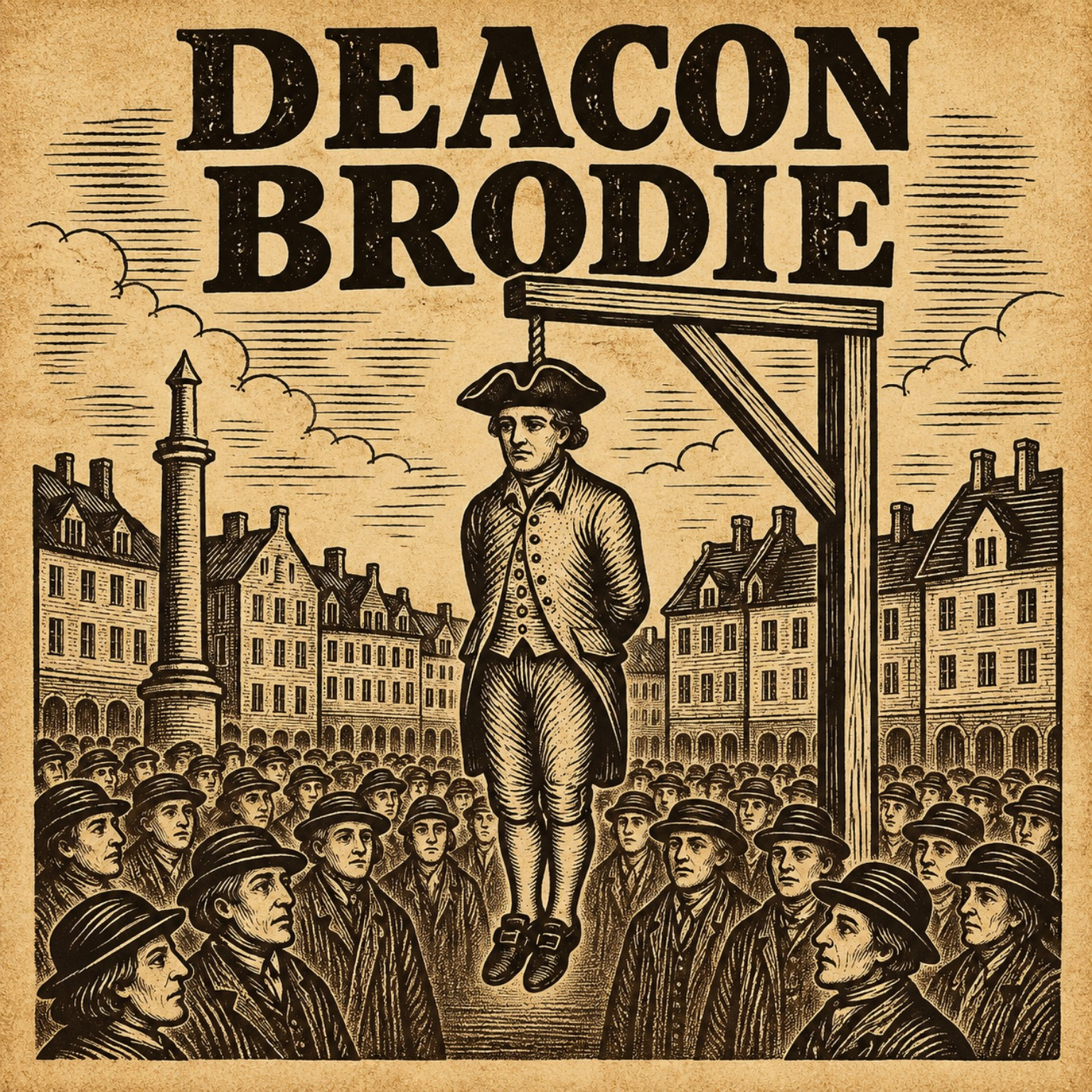
Along Edinburgh’s Royal Mile, one name still carries the pull of a double life: William Brodie. A respected cabinetmaker, locksmith and Deacon of the Incorporation of Wrights and Masons, Brodie maintained a respectable public face while secretly taking part in burglary and gambling.
A Life of Shadows and Splinters
His criminal career culminated in the raid on Scotland’s General Excise Office at Chessel’s Court on 5 March 1788. The scheme unravelled after accomplice John Brown gave evidence. Brodie fled, but letters helped authorities trace him to Amsterdam, where he was arrested and returned to Edinburgh.
Brodie and George Smith were tried in August 1788 and convicted. On 1 October they were hanged at the west end of the Luckenbooths, near St Giles. Later legend embroidered the execution with tales that Brodie tried to cheat the gallows using a concealed device or arrangement with the executioner. Whatever hopes he may have entertained, his documented story ended on the scaffold.
Folklore and Legacy
Robert Louis Stevenson knew Brodie’s story and later co-wrote the play Deacon Brodie with W. E. Henley. Brodie is also frequently discussed in connection with Stevenson’s fascination with divided identity and Strange Case of Dr Jekyll and Mr Hyde, although reducing the novel to a single real-life inspiration goes further than the evidence allows.
Edinburgh folklore has continued the story beyond Brodie’s death. Tales place unexplained footsteps, rattling keys and shadowy figures around the closes associated with his name. These belong to the city’s later haunted tradition rather than the surviving record of Brodie’s life.
The power of the story needs little embellishment: a respected tradesman trusted with locks and keys who secretly used that knowledge against the society that trusted him.
Would you follow the footsteps of the man who fooled Edinburgh and became one of its most enduring legends?