
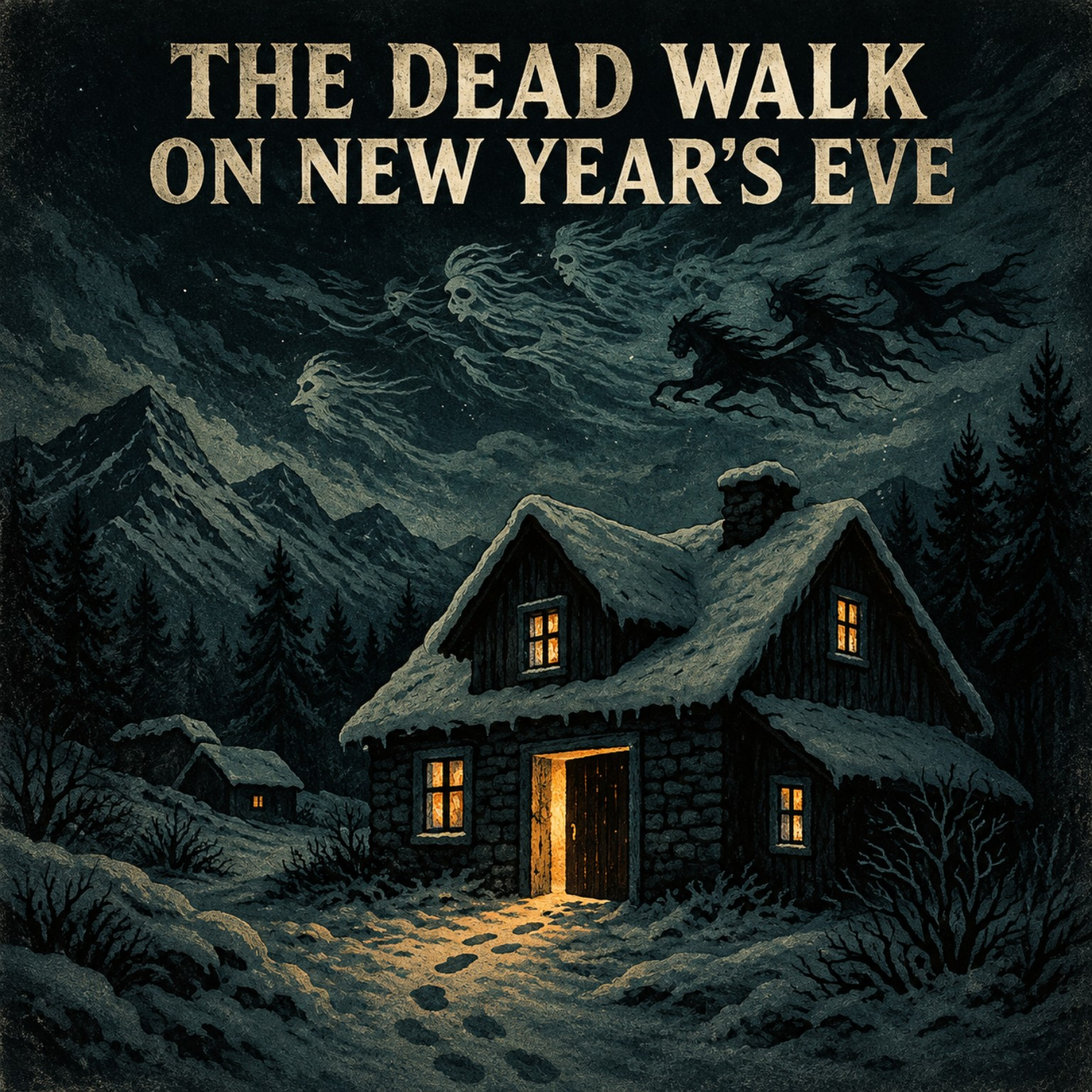
Across German-speaking Central Europe, the nights around Christmas and Epiphany are known in folklore as the Rauhnächte. Their exact number, dates and customs vary by region, but they form a liminal midwinter period associated with purification, divination and supernatural danger.
The Rough Nights
Incense and ritual smoking of homes and farm buildings are among the best-attested Rauhnächte customs, particularly in Alpine regions. The season also became associated with beings such as Perchta and with traditions of the Wild Hunt, whose leader changes from one telling and region to another.
New Year’s Eve, or Silvester, falls within this wider cycle. It acquired its own customs for protecting the household, reading omens and driving away harmful influences as one year turned into another.
Midnight Omens
Divination became a familiar part of New Year celebration. Bleigießen, the pouring of molten lead into water and interpreting the resulting shape, became a popular German-speaking custom. Modern versions often substitute safer materials for lead.
Stories about ancestral visitors, wandering dead and spectral processions belong to the wider supernatural atmosphere of the Rauhnächte, but customs differ too much from village to village to claim that every household opened its doors to the dead or that midnight universally belonged to spirits.
The Threshold Night
The old traditions nevertheless share a compelling idea: the turning of the year is a threshold. Smoke moves through the house, omens are read, the winter sky becomes a road for supernatural travellers, and ordinary rules feel briefly less certain.
The living celebrate. The old stories say the unseen may travel too. And the year turns.