
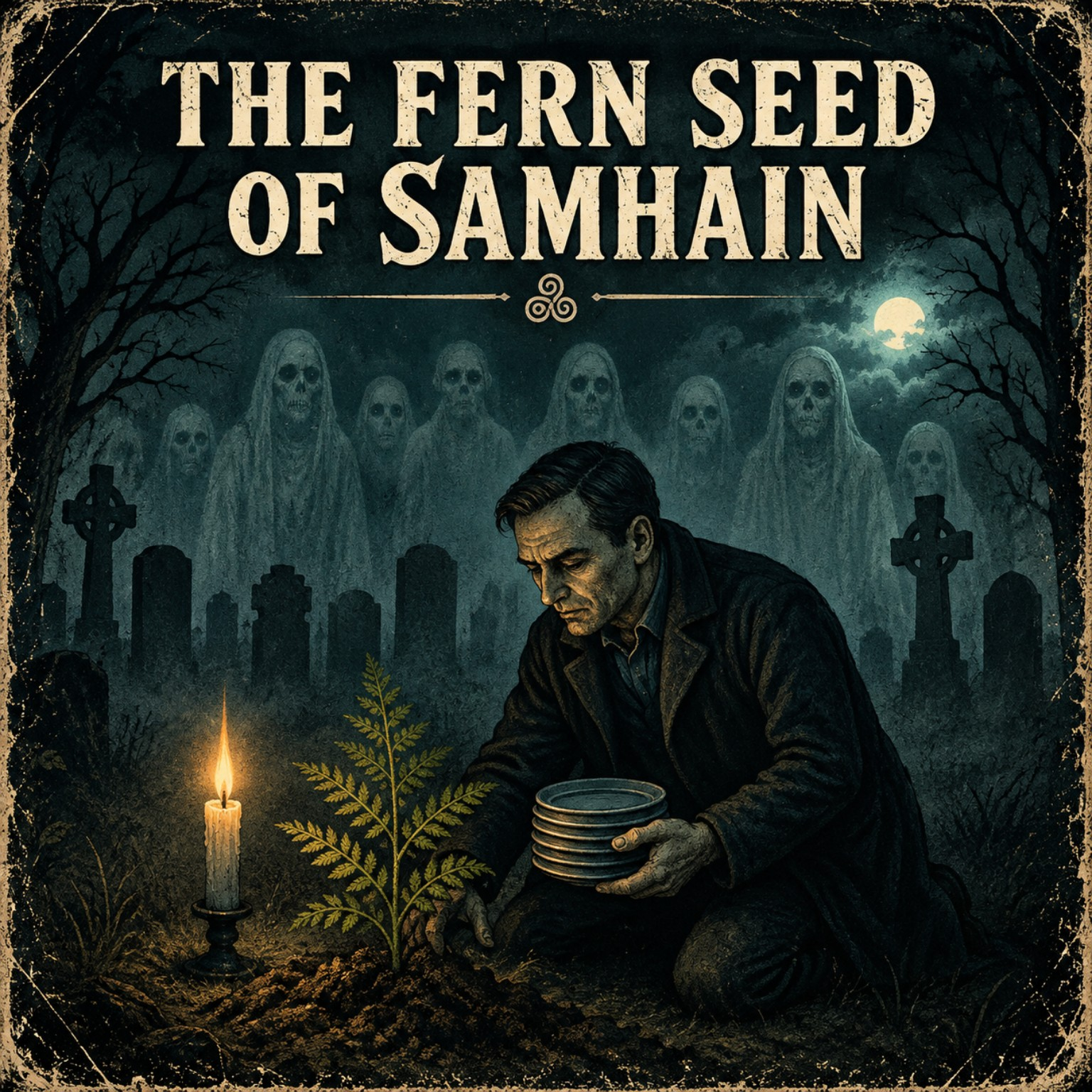
As the veil thins on Samhain night, when the wind carries whispers and the earth exhales its damp breath, the ferns begin to stir. Ferns do not flower or produce seeds in the botanical sense, but older folklore imagined something stranger: a hidden fern seed, almost impossibly small, carrying powers unavailable in ordinary daylight.
A Seed That Should Not Be
One Irish account of the fern-seed ritual describes going alone to a wooded place before midnight with nine pewter plates stacked beneath the fern and paper or white linen below. At midnight, the enchanted seed was said to fall through the plates until it reached the final layer, where it could be gathered and carried.
The prize was invisibility. Whoever possessed the seed could supposedly move unseen, but collecting it was no quiet botanical exercise. Folklore warned that the powers of darkness would try to frighten the seeker away with screams, storms, terrifying visions and other disturbances.
The Gift and the Warning
The old ritual belongs to a wider body of European fern-seed folklore in which an invisible 'seed' could confer invisibility, luck or access to hidden things. In an Irish Halloween setting, it sits naturally beside older traditions of dangerous boundaries, wandering spirits and a countryside transformed after dark.
That does not make every later story about fern seed part of one ancient Samhain tradition. Tales of fairy sight, Otherworld journeys and hidden realms belong to the wider folklore surrounding the season and the Aos Sí, and over time such ideas have often become entwined with the fern-seed motif.
The image remains powerful: a person alone beneath the fern at midnight, plates stacked, linen spread, waiting for something that should not exist to fall through the darkness.
Would you reach for it, knowing what might reach back?