
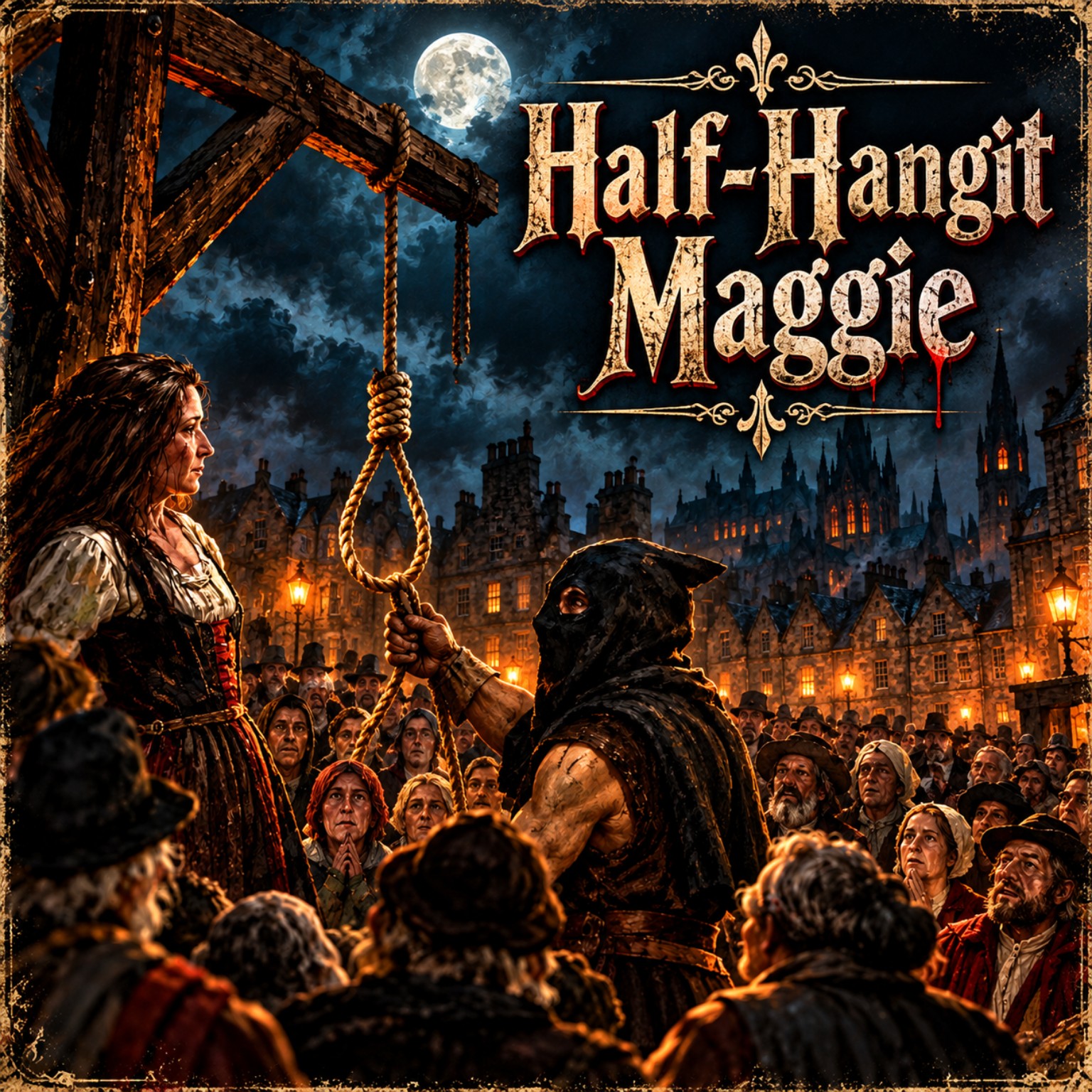
Maggie Dickson was born and raised five miles from Edinburgh in a place called Musselburgh in 1702. Not much is known of her early life. She married a fisherman by the name of Patrick Spence and lived with him in Musselburgh until he abandoned her in 1723.
To this day, the circumstances surrounding Spence's disappearance remains a mystery. Some stories say he was forced to join the Royal Navy. Others say he joined a fishing fleet, never to be seen again.
Regardless, Maggie found herself alone and needed to find a way to make a living. She set about to make a new life for herself. She went to Edinburgh and wandered the Royal Mile, selling salt. An essential ingredient in those days in the preservation of various meats and fish. It was a decent living but a hard way to make the life she imagined.
Eventually Maggie found herself in a town called Kelso, and she found work at an inn. Maggie worked closely with the younger son of the landlord and began a secret affair. Within the year, the 23-year-old Maggie became pregnant. This was problematic for a young, married woman during this time; she concealed the pregnancy, worried that she would lose her job at the inn and any promise of income or accommodation.
Maggie gave birth to a premature baby boy; it is unclear if the baby was stillborn or died a few days after his birth. With few options and beyond heartbreak, Maggie kept quiet about the child's birth and death; she wrapped the body of her newborn and left it on the banks of the river Tweed.
Some days later, the body of the infant was found washed up in Maxwellheugh, and all evidence was pointing back to Maggie. She was soon arrested and charged with concealing the pregnancy.
Maggie was held at the Tolboth in Edinburgh awaiting her trial. An examination of the infant's body took place, and it was the deposition of the medical examiner that the infant was drowned. The charges of homicide were charged to Maggie as she continued to claim she was innocent of the charges. On August 6th, the jury found her guilty, and the judge sentenced her to death by hanging with a date set for the following month.
It was September 2nd 1724 in the Grassmarket of Edinburgh. Thousands of people gathered to witness her execution. As she stood on the gallows with the hangman's noose around her neck, the people screamed abuse and accusations at Maggie before the executor pushed Maggie from her stand, leaving her to hang.
Maggie was left hanging for over 30 minutes before there was a big rush almost resulting in a riot. Students of The Edinburgh Surgeons Collage charged to claim Maggies lifeless corpse. At this time in Edinburgh, grave robbing was widespread, and one could earn between 3 - 6 months wage for one body. Legally, the only bodies allowed to go to the Medical students for dissection were executed criminals.
As the story goes, luckily for Maggie, friends and family managed to recover her body; they placed her into a coffin with the intention of bringing her home to be buried. Along the way they stopped off at a local inn, which is still open to this day. It is Scotland's oldest pub, and it is called "The Sheep Heid Inn".
Her family wanted to celebrate and toast the life of Maggie. One story says that the family had brought the coffin inside the pub with them, paranoid of another attempted bodysnatching, when, suddenly, they heard banging and scratching from inside the coffin. The men in the inn jumped and scattered with fright and fear. The lid of the coffin lifted and fell to one side. Maggie rose up; she was alive.
The court decided that the execution had been completed; in the eyes of the law, Maggie was dead, and as she had already been executed for her crime, she could not be retried or executed a second time for the same charges. The court stated that it was "God's Will" that she had survived that day.
Some stories claimed that Maggie knew and had a conversation with the hangman in her cell; he agreed to leave the noose loose enough so that she could get her hands under the rope, saving her from a grim faith.
Maggie lived for another 30 years after her execution and is said to have returned to the site of her hanging in Edinburgh's Grassmarket, where she had drinks to celebrate the anniversary of her lucky escape from death that day.
She became known as Half Hanggit Maggie; she died in 1753 at the age of 51. Today in the Grassmarket, there is a monument on the site where Maggie was hanged, and there is a pub dedicated to her called "Maggie Dicksons".
So the next time you find yourself in Edinburgh's Grassmarket, raise a toast to Half Hanggit Maggie.