
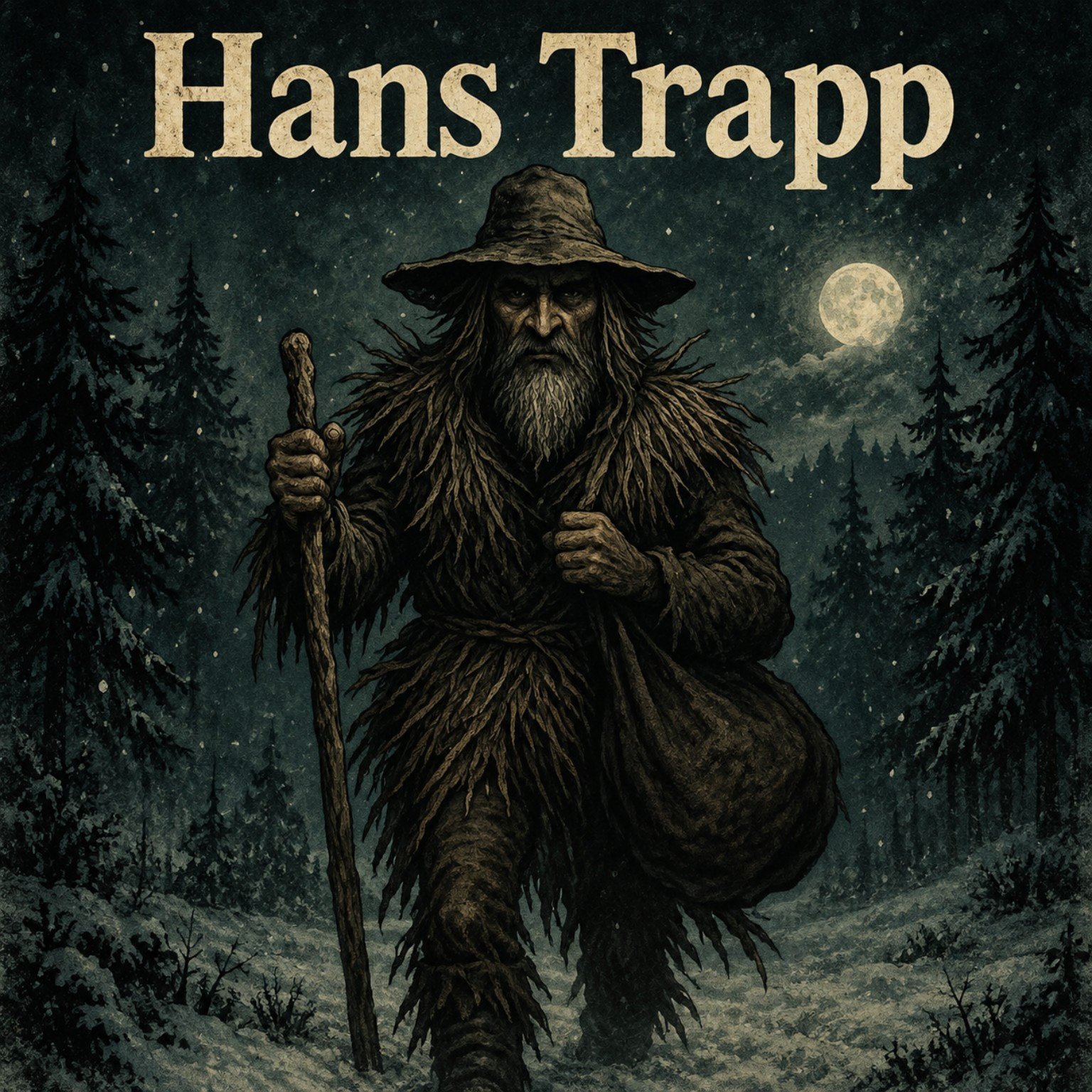
In the winter traditions of Alsace, Saint Nicholas does not always travel alone. Among the figures who may accompany him is Hans Trapp, a frightening character whose name became a warning to misbehaving children and whose legend reaches across the Franco-German borderlands.
From Knight to Folklore
Behind the legend stands Hans von Trotha, a late-medieval knight associated with Berwartstein Castle in the Palatinate. Over time, his name was transformed in regional folklore into Hans Trapp, a sinister 'Black Knight' and bogeyman. In neighbouring Alsace, Hans Trapp became associated with the seasonal traditions surrounding Saint Nicholas.
The folklore went much further than the surviving history. Later stories turned Hans Trapp into a wealthy, cruel man accused of sorcery, cast out from society and driven into the forest. Dressed in rags and straw, he became less a knight of history and more a creature of winter warning.
Folklore and Legend
In darker versions of the tale, Hans Trapp becomes a would-be cannibal who prepares to devour a child before divine punishment strikes him down. This belongs to legend rather than the documented biography of Hans von Trotha, but it helped shape the monstrous figure remembered in seasonal storytelling.
Within Alsatian Christmas tradition, Hans Trapp stands in contrast to Saint Nicholas: reward and punishment walking the same winter road. Straw, rough clothing and an intimidating presence turn him into something between outlaw, scarecrow and ghost.
Modern Alsatian seasonal storytelling still recognises Hans Trapp among the region’s legendary Christmas figures, alongside Saint Nicholas and Christkindel.
What makes Hans Trapp particularly compelling is the way history and folklore have fused. A real medieval knight became a regional bogeyman; the bogeyman entered Christmas tradition; and centuries later the frightening name still survives.
If cast out into the cold, would you choose redemption, or become the thing the forest fears?