
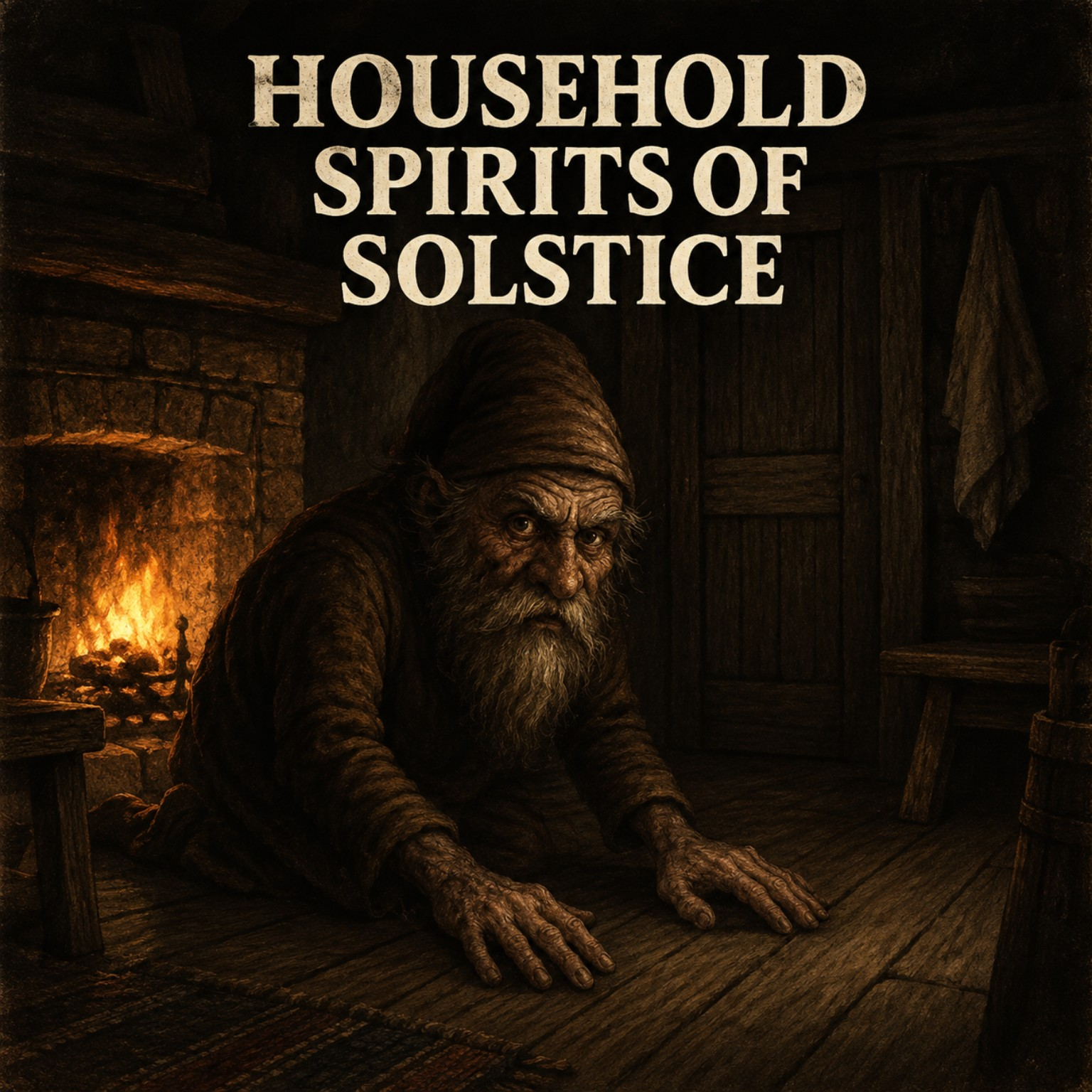
Across northern Europe, winter folklore brought supernatural beings unusually close to the home. The darkest season was not populated by one universal Solstice spirit, but by a patchwork of household guardians, farm spirits and unseen helpers whose traditions often clustered around Christmas and midwinter.
Guardians of Farm and Hearth
In Scandinavian tradition, the tomte or nisse guarded the farmstead. Protective when respected and formidable when offended, the household spirit expected proper treatment. Christmas offerings became especially important, with porridge or gruel, often enriched with butter, left for the spirit.
In Scotland, the brownie occupied similar household territory. Brownies were said to work unseen at night, performing domestic or farm labour. Food such as milk or cream might be left for them, while insult or mistreatment could cause them to abandon the household or turn mischievous.
Solstice, Christmas and the Long Night
It is tempting to gather these beings beneath the Winter Solstice itself, but the surviving traditions do not support one ancient pan-European belief that Solstice night was universally their greatest night of power. Their stories come from different cultures and calendars. What unites them is the older winter household: darkness outside, work unfinished, animals sheltered, food stored and the hearth at the centre of survival.
That makes them natural companions to the season even when their particular customs belong to Christmas, Yule or local winter traditions rather than the astronomical Solstice.
An Inhabited Winter
Footsteps in an empty kitchen, a creak above the rafters or something shifted overnight can still evoke the world these stories inhabited. Whether understood as folklore, family tradition or something unexplained, household spirits give the winter home a personality of its own.
When the longest nights return, who watches over the hearth?