
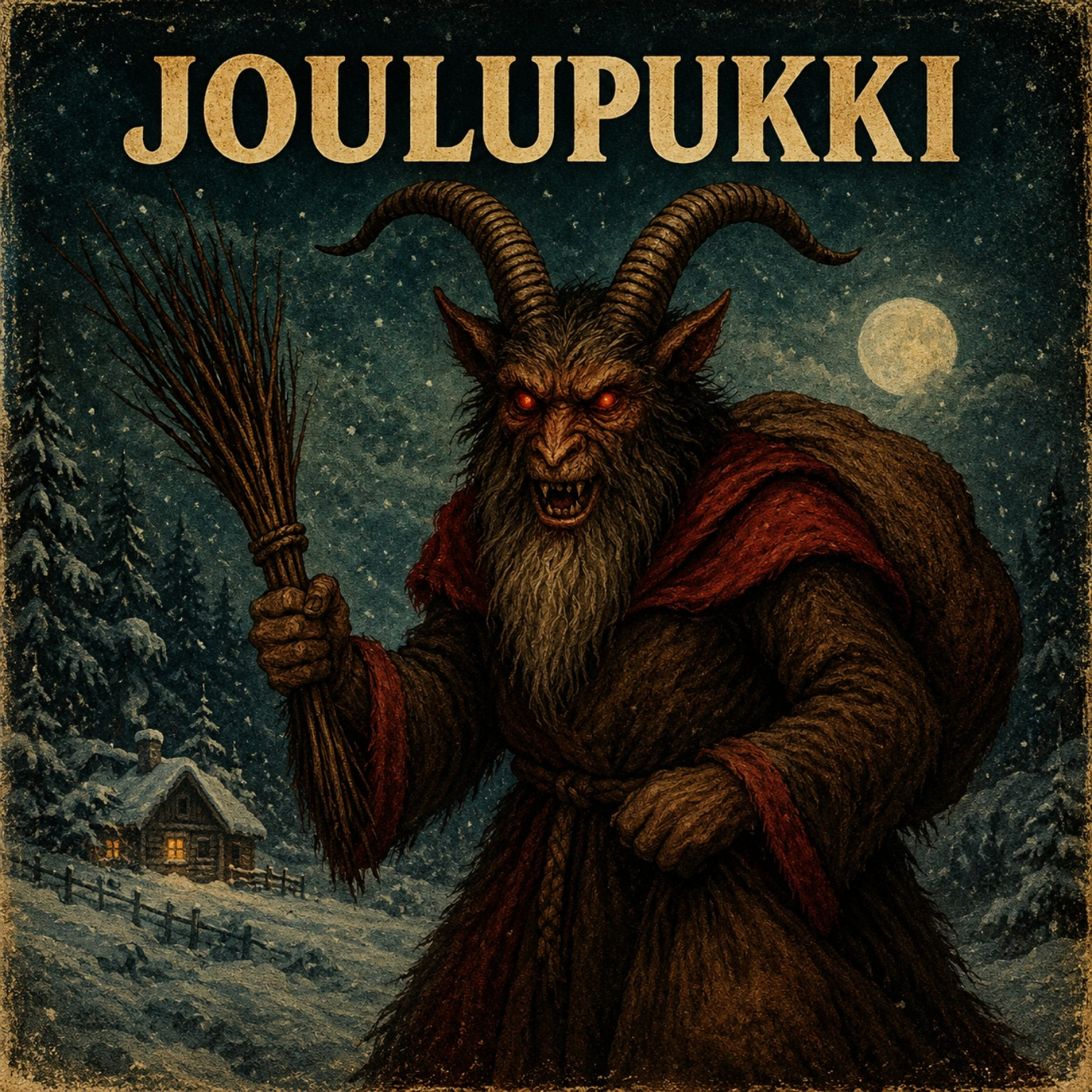
Before Finland’s Joulupukki became the familiar gift-bringer of modern Christmas, his name and traditions belonged to a rougher world of masked visitors, horns, fur and demands at the door.
Before the Red Suit, There Were Horns
Joulupukki literally means Christmas or Yule goat. Finnish tradition is connected with the wider Nordic custom of costumed Yule-goat figures and, particularly, the nuuttipukki: a frightening post-Christmas visitor associated with St Knut’s Day.
Groups or individuals dressed in fur, masks and horns went from house to house asking for food and drink. Refusal could invite pranks or intimidation. The custom survived especially strongly in parts of southwestern Finland.
From Demanding Visitor to Gift-Bringer
During the nineteenth and early twentieth centuries, Nordic Christmas traditions changed as older goat figures mixed with emerging Father Christmas and Santa Claus imagery. Finland retained the old name Joulupukki even as the character became a benevolent visitor bearing presents.
Claims that the Finnish goat can be traced directly to a single ancient pagan fertility rite, or specifically to Thor’s goats, are tempting but much harder to demonstrate. The documented house-visiting traditions provide a firmer trail.
Coca-Cola’s twentieth-century advertising helped popularise a hugely influential image of Santa, including work by Finnish-American illustrator Haddon Sundblom, but the company did not invent either Santa Claus or the red-suited Santa.
The Goat Beneath the Name
Modern Joulupukki may be friendly, but his name still carries the memory of the older horned visitor who expected the household to answer when he knocked.
If the horned one knocked at your door this winter, what would you offer him?