
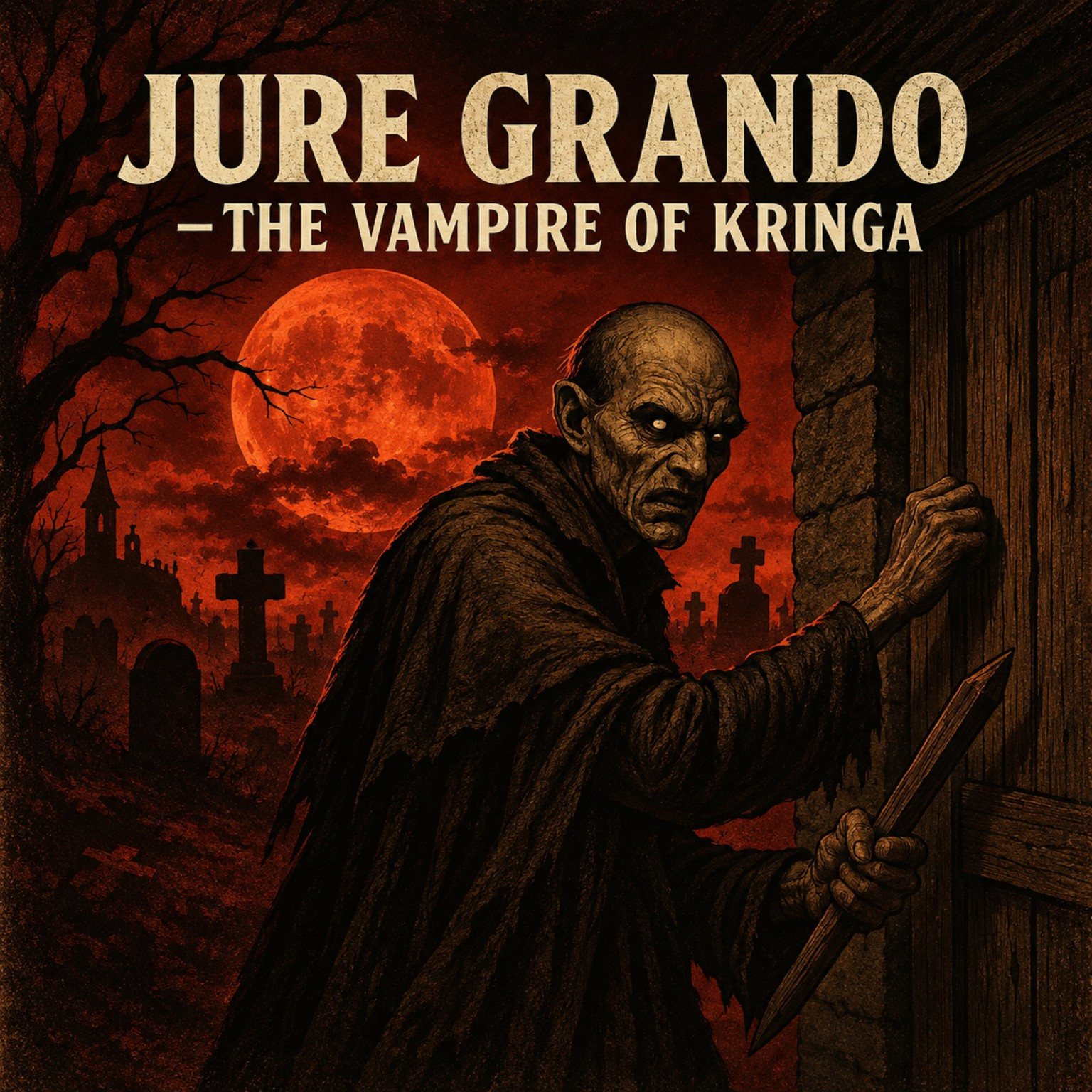
In the quiet Istrian village of Kringa, the story of Jure Grando Alilović became one of Europe’s best-known early written accounts of a revenant later described as a vampire.
History Beneath the Soil
The story is preserved in Johann Weikhard von Valvasor’s 1689 work The Glory of the Duchy of Carniola. Valvasor wrote that Grando had died years earlier but was believed to return at night, knocking at doors and terrifying the village. The account says the disturbances continued for sixteen years.
According to the narrative, Grando also appeared to his widow. Eventually a group of villagers and a priest went to his grave. They opened it and found the corpse preserved in a manner they considered unnatural. An attempt to pierce the body failed, and the men ultimately decapitated it. Valvasor reports that the disturbances then ceased.
Folklore and Legend
Grando’s story belongs to the wider southeastern European tradition of the dangerous returning dead. The terminology surrounding such beings varies considerably by language and region, so later labels such as vampire or strigoi should not be treated as if every community used them identically.
The case is often promoted as the first documented vampire, but that claim is too absolute. What makes it genuinely important is that Valvasor’s seventeenth-century account is an unusually early and detailed written description of a named person accused of returning from the grave and harming the living.
Echoes in Kringa
Modern Kringa has embraced the legend as part of its identity, but the strongest mystery remains the historical text itself: a seventeenth-century writer recording a community’s belief that one of its dead refused to stay buried.
Would you walk the cemetery path after dark, knowing the story that made Kringa famous?