
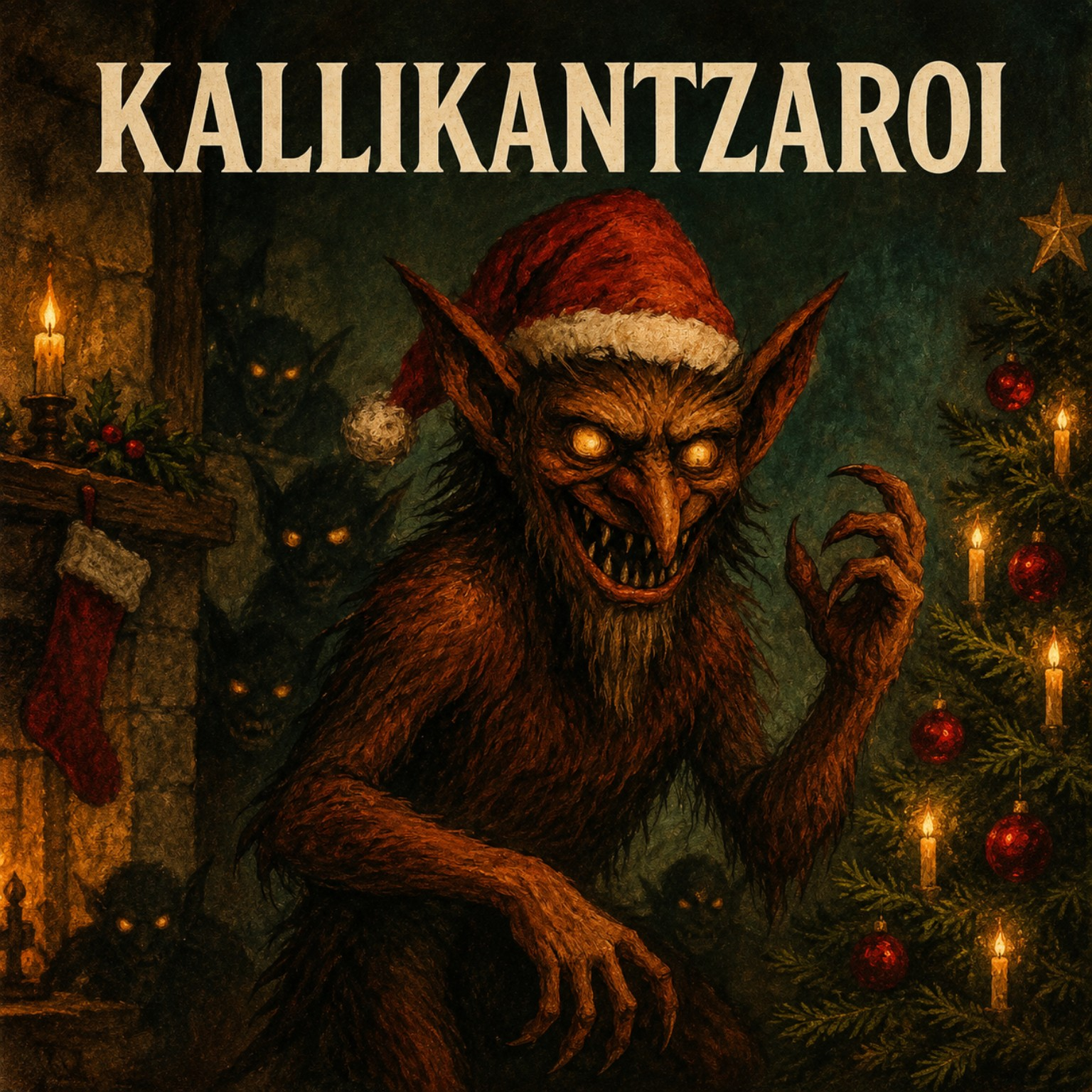
In Greek folklore, the Kallikantzaroi are troublesome supernatural beings associated with the Twelve Days of Christmas, the period between Christmas and Epiphany. Their appearance and behaviour vary dramatically from place to place, but mischief is rarely far away.
When the Underworld Comes Up for Christmas
A famous version of the tradition says they spend most of the year underground sawing at the great tree that supports the world. Just as their work nears completion, Christmas arrives and they rush to the surface. When Epiphany sends them below again, the tree has healed and their endless labour begins anew.
They may be imagined as black and hairy, animal-like, malformed, enormous or diminutive. Rather than one fixed monster, the Kallikantzaros is a family of regional descriptions.
Folklore and Protection
Chimneys are a favourite route into the home, which helps explain protective traditions centred on the hearth. Folklore records fires kept burning, incense, crosses and other apotropaic measures intended to keep the visitors away.
Epiphany ends their season. The blessing of waters and Christian rites surrounding the feast mark the restoration of order and the retreat of the Kallikantzaroi.
Similar midwinter beings and related names occur beyond Greece in parts of southeastern Europe, but their traditions should not be treated as identical everywhere.
If something came down the chimney during the Twelve Days, would your hearth be ready?