
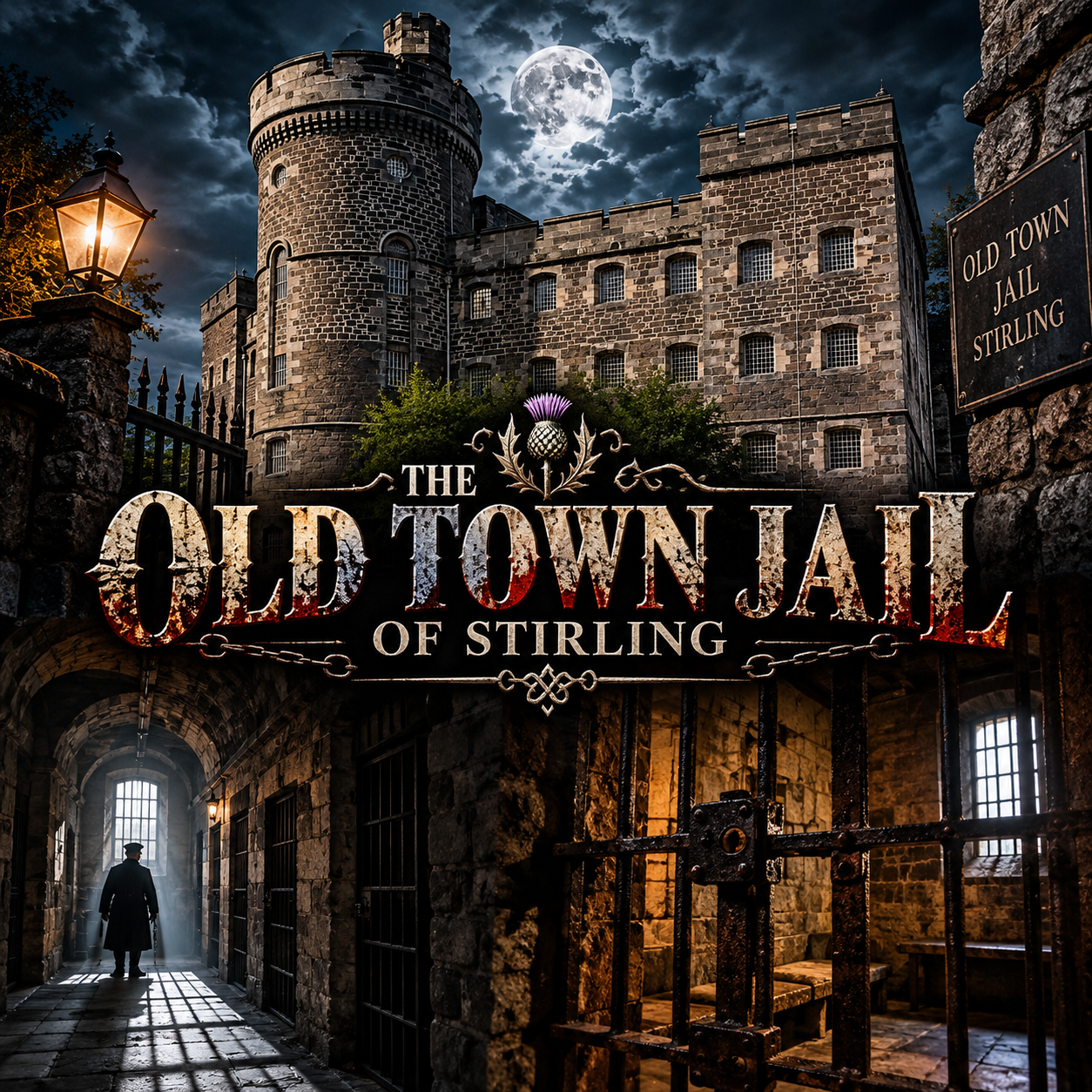
History: A New Prison, An Old Misery
When the doors of Stirling's Old Town Jail first opened in 1847, it was presented as a symbol of progress.
The grim and overcrowded Tolbooth, long condemned for its appalling conditions, was to be replaced by a modern Victorian prison built on the latest theories of discipline and reform. Behind its imposing stone walls, order would replace chaos. At least, that was the intention.
Reality proved far harsher.
Prisoners were subjected to strict isolation, often spending long periods alone with little human contact. Days were governed by silence, routine, and relentless labour. One of the most feared punishments was the crank machine, a heavy iron handle turned repeatedly for hours at a time. The task served no practical purpose. Its only function was exhaustion. Hands blistered, muscles failed, and spirits slowly eroded.
What had been built as a model prison soon gained a reputation for cruelty.
Later used as a military prison, the building continued its association with confinement and punishment until finally closing in 1935. Yet for many, the stories locked inside did not leave with the last inmate.
Folklore: The Prisoners Who Never Walked Free
Every prison collects stories.
Some are written in official records. Others survive as whispers passed between generations.
Locals spoke of cries carried on the wind after dark, drifting from a building that should have been silent. Neighbours claimed to see movement in barred windows long after the cells stood empty. Shapes seemed to cross from one side of a corridor to another before vanishing into shadow.
The isolation cells became the focus of particular unease.
According to local tales, some prisoners struggled to endure the loneliness imposed upon them. Stories grew of men driven to despair by the silence, their suffering somehow absorbed into the stone itself. Whether rooted in fact or imagination, the jail developed a reputation as a place where misery lingered long after the punishment had ended.
Unlike castles associated with noble families and ancient battles, the Old Town Jail became linked to ordinary people caught in extraordinary hardship.
Their names may have been forgotten.
Their stories were not.
Paranormal Aftermath: The Weight of the Cells
Today, the Old Town Jail stands as one of Scotland's most popular historic attractions. Yet alongside the guided tours and historical displays are countless reports from visitors who believe something still inhabits the building.
Many describe feeling an overwhelming sense of dread in the isolation cells, a heaviness that seems to settle over them the moment the door closes. Others report sudden cold spots, unexplained footsteps, or the sound of doors slamming when no one is nearby.
Paranormal investigators frequently speak of physical experiences.
Some claim to feel unseen hands brushing against their arms. Others report being touched, pushed, or startled by sensations they cannot explain. The sound of chains rattling is occasionally reported despite there being none present, while the smell of decay is said to appear suddenly before disappearing moments later.
Perhaps most unsettling are the accounts of screams.
Visitors and staff have occasionally reported hearing distant cries echoing through abandoned sections of the building. When investigated, the source is never found.
For some, these experiences are products of suggestion, born from the prison's dark history. For others, they are signs that the suffering once contained within these walls left a deeper imprint than anyone realised.
The Old Town Jail was built to imprison bodies.
Its reputation suggests something else may still be trapped there.
If the door of an isolation cell closed behind you, would you be more concerned about what was inside with you, or what might be waiting when you tried to leave?