
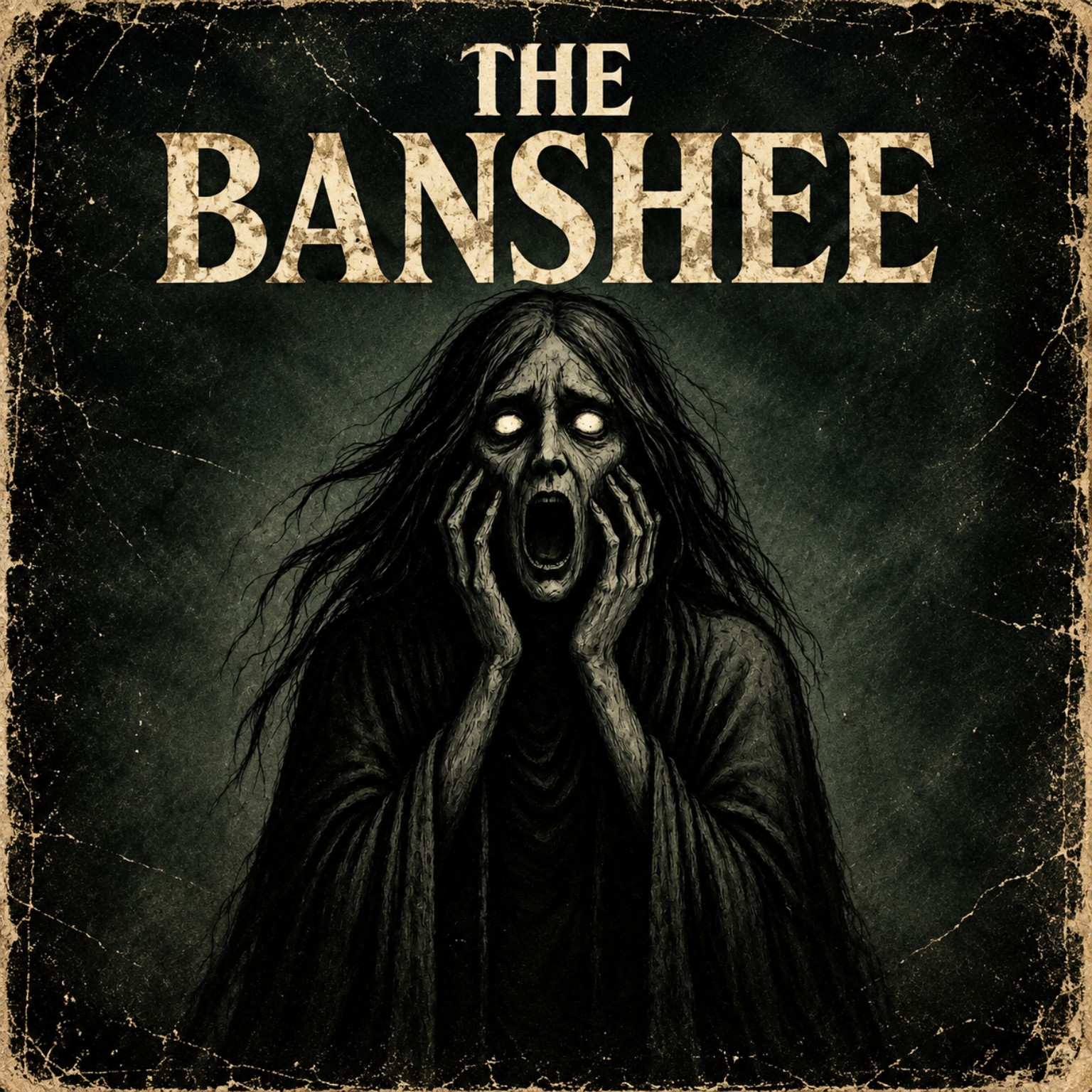
In the hush of an Irish night, before electricity and engines filled the silence, there were sounds that could turn a strong man pale. None chilled the blood like the cry of the Banshee. It was said to come suddenly, on the wind or outside a cottage door, long and sorrowful, carrying over fields and rivers to reach the ears of the living. Those who heard it knew that death walked close behind.
The name comes from the Irish Bean Sí, woman of the mound. The mounds were believed to be entrances to the otherworld, homes of the Aos Sí. To encounter a banshee was not to meet a killer, but a mourner, one who keened for the dead before death had even arrived.
The banshee’s role is rooted in a genuine Irish funeral practice: keening (caoineadh). For centuries, keening women would wail and chant poetic laments at wakes and funerals, giving voice to grief that could not be held in silence. Their cries were so piercing and haunting that they carried for miles. Over time, this human practice fused with the supernatural in the Irish imagination. The keening woman of the wake became the keening woman of the sidhe.
The banshee is not bound to a single shape. In some accounts she appears as a young woman of otherworldly beauty, combing her long hair with a silver comb by moonlight. In others, she is a sorrowful matron cloaked in grey, or an old crone with wild hair and red-rimmed eyes. Sometimes she is seen washing bloodstained clothes in a stream, a grim mirror of the Scottish bean nighe, the washer woman at the ford. Her presence was always clear, she mourned before the death occurred.
Families with ancient Gaelic lineages, especially those whose names begin with O’ or Mac, were said to have their own banshee. She would appear only to mourn members of that family, generation after generation. Some tales say that when a great person was about to die, multiple banshees would gather and keen in chorus.
Her cry is unlike any other sound in Irish folklore. Descriptions speak of a long, wavering lament, sometimes shattering windows, sometimes barely a whisper. It might be heard miles away, carried through valleys and glens. Those who heard it would often fall silent and pray for their families, for the cry of the banshee was a message that could not be ignored.
Unlike many supernatural beings, the banshee does not harm. She does not bring death, she heralds it. She is a liminal figure, standing between this world and the next, mourning on behalf of families who may not yet know their grief is coming. Her sorrow is for the dying and the living alike.
Though modern Ireland hums with light and noise, the figure of the banshee has not faded. Her name is whispered on ghost tours and remembered in family stories. Some rural households still speak of strange cries on the wind, of hair found on windowsills, of combs left in unexpected places. She lingers like a shadow at the edge of memory, neither fully gone nor entirely here.
The banshee reminds us that death was never just a private matter in old Ireland. It was woven into the land, carried on the wind, and mourned by spirits who walked beside us unseen. Her wail is not one of terror, but of timeless grief.