
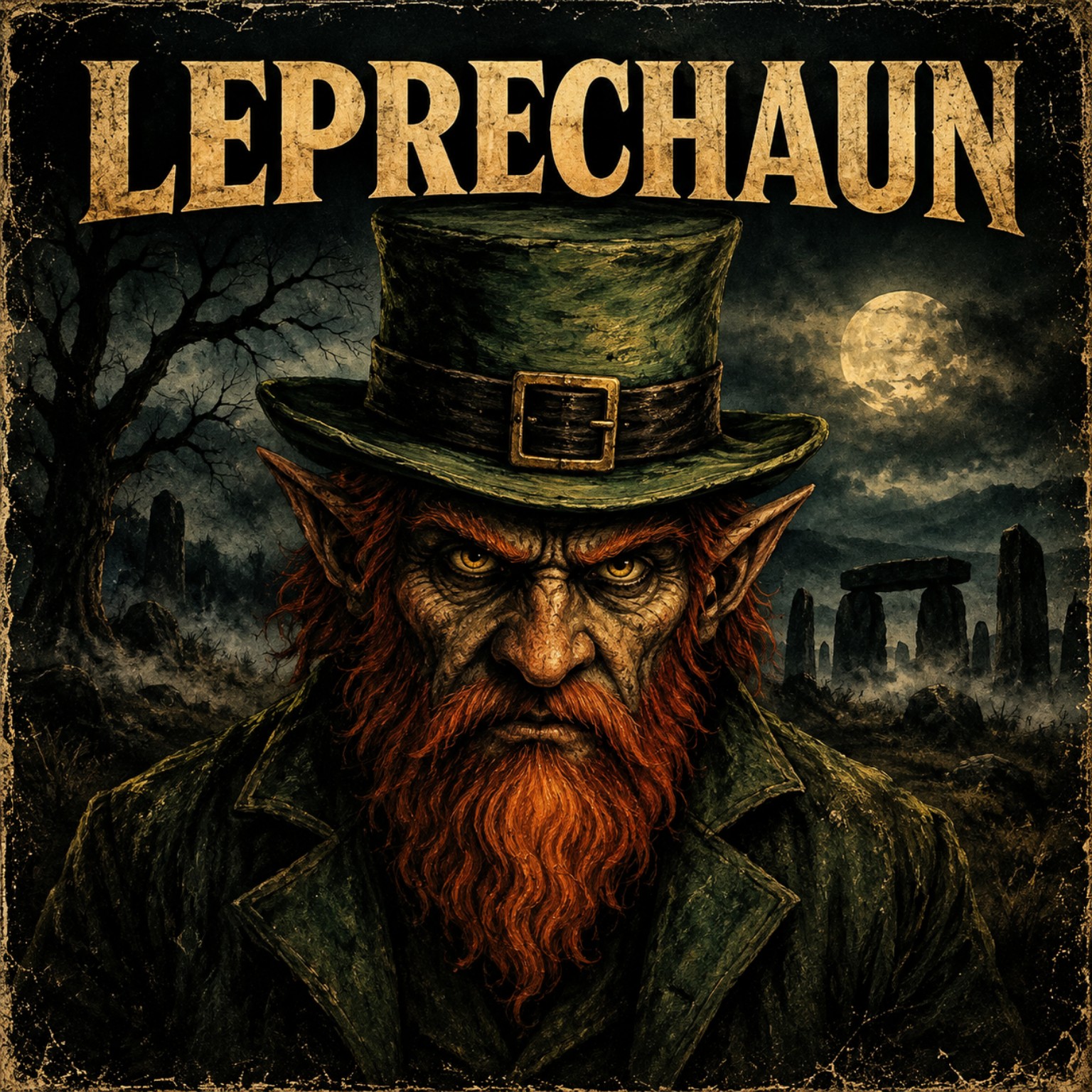
Long before tourist postcards and green-clad mascots, the leprechaun belonged to a stranger world of Irish storytelling: solitary, elusive and far more interested in outwitting humans than entertaining them.
The word is commonly traced through Irish forms such as leipreachán and earlier luchorpán. Medieval literature contains small supernatural beings, while the recognisable leprechaun of later folklore developed into a solitary fairy strongly associated with shoemaking, hidden wealth and trickery.
In many older literary descriptions the leprechaun is dressed in red rather than the green that became dominant in modern popular imagery. Costume, appearance and temperament vary across sources, but the cobbler’s hammer remains one of his most persistent signatures.
To capture one is to enter a battle of attention. Folklore repeatedly warns that the leprechaun will exploit the smallest distraction. Look away and both fairy and promised treasure disappear.
The clurichaun occupies neighbouring territory in Irish fairy lore: a solitary, drink-loving figure associated particularly with cellars and alcohol. Folklorists and storytellers have sometimes treated the clurichaun and leprechaun as related beings or regional variations, though the traditions are not identical.
The leprechaun has changed dramatically as Ireland’s image travelled around the world. Yet behind the cheerful green mascot survives the older figure: craftsman, trickster and keeper of wealth, waiting for the mortal who thinks he is clever enough not to blink.