
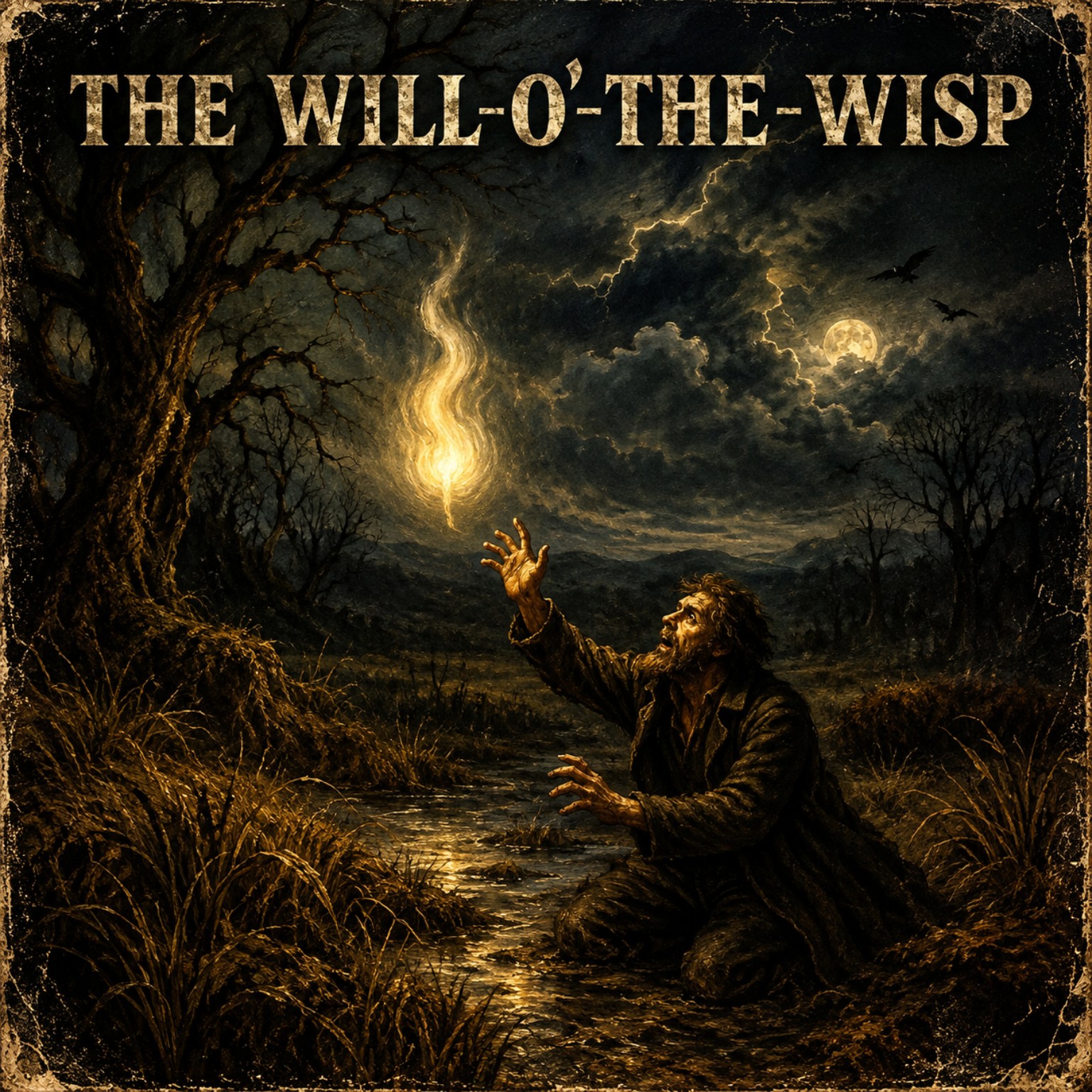
Across boglands, marshes and lonely roads, folklore tells of mysterious lights that hover just ahead of travellers. Known by many regional names, the Will-o’-the-Wisp became a warning against following strange lights into dangerous ground.
In Britain and Ireland, wandering lights were variously interpreted as spirits, tricksters or omens. Jack-o’-lantern traditions also became associated with mysterious nocturnal lights, though the stories are not all versions of one single legend.
Natural explanations proposed for historical marsh lights include chemical processes involving gases released by decaying organic matter, but no single explanation neatly accounts for every story collected under the name.
The image survives because it is simple and unsettling: one light in the darkness, always far enough ahead to make you take another step.