
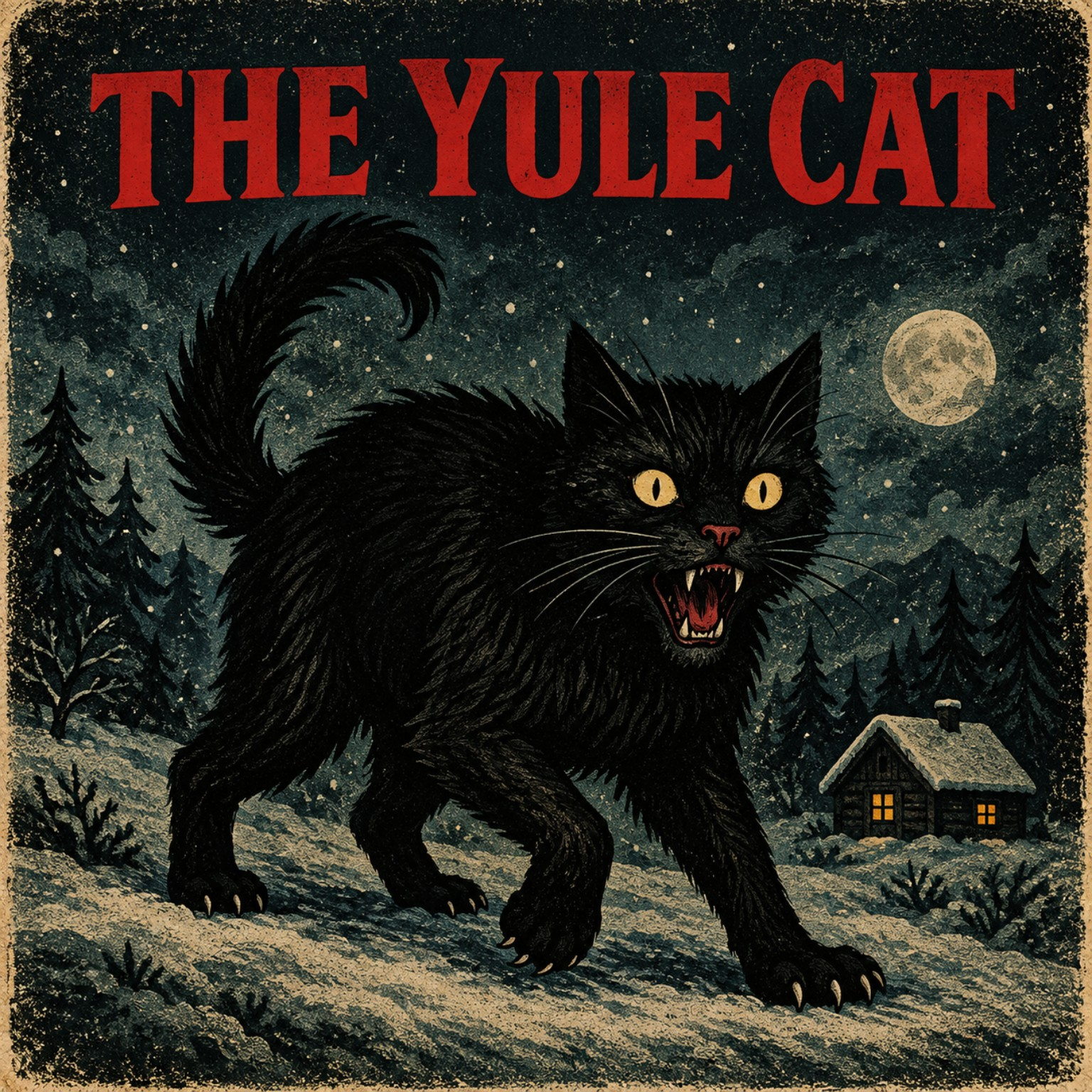
In Icelandic Christmas folklore, Jólakötturinn, the Yule Cat, prowls the winter season looking for those who have failed to receive new clothes before Christmas. Huge, threatening and thoroughly unlike a fireside pet, the cat turns a practical tradition into a monster story.
New Clothes or Face the Cat
The earliest definitive written description appears in Jón Árnason’s nineteenth-century folklore collection. In the tradition he recorded, people without new clothing risked being eaten by the Yule Cat, or in another version losing their special Christmas food.
The threat became associated with the seasonal wool work of Icelandic farms. Finishing the autumn wool processing helped earn workers new clothing for Christmas. The Yule Cat therefore offered a memorable supernatural incentive to finish the work.
A Legend Takes Shape
The cat’s place in modern Icelandic Christmas culture was strengthened enormously by Jóhannes úr Kötlum’s 1932 poem Jólakötturinn. Modern retellings often place the cat with Grýla and the Yule Lads, although the older written material does not present every element of today’s Christmas cast as one fixed family tradition.
The result is one of Europe’s most distinctive Christmas monsters: not a judge of whether you were simply naughty or nice, but a predator interested in whether the household’s winter work had been done.
If the snow fell tonight and the Yule Cat passed your window, would you be wearing something new?