
Introduction
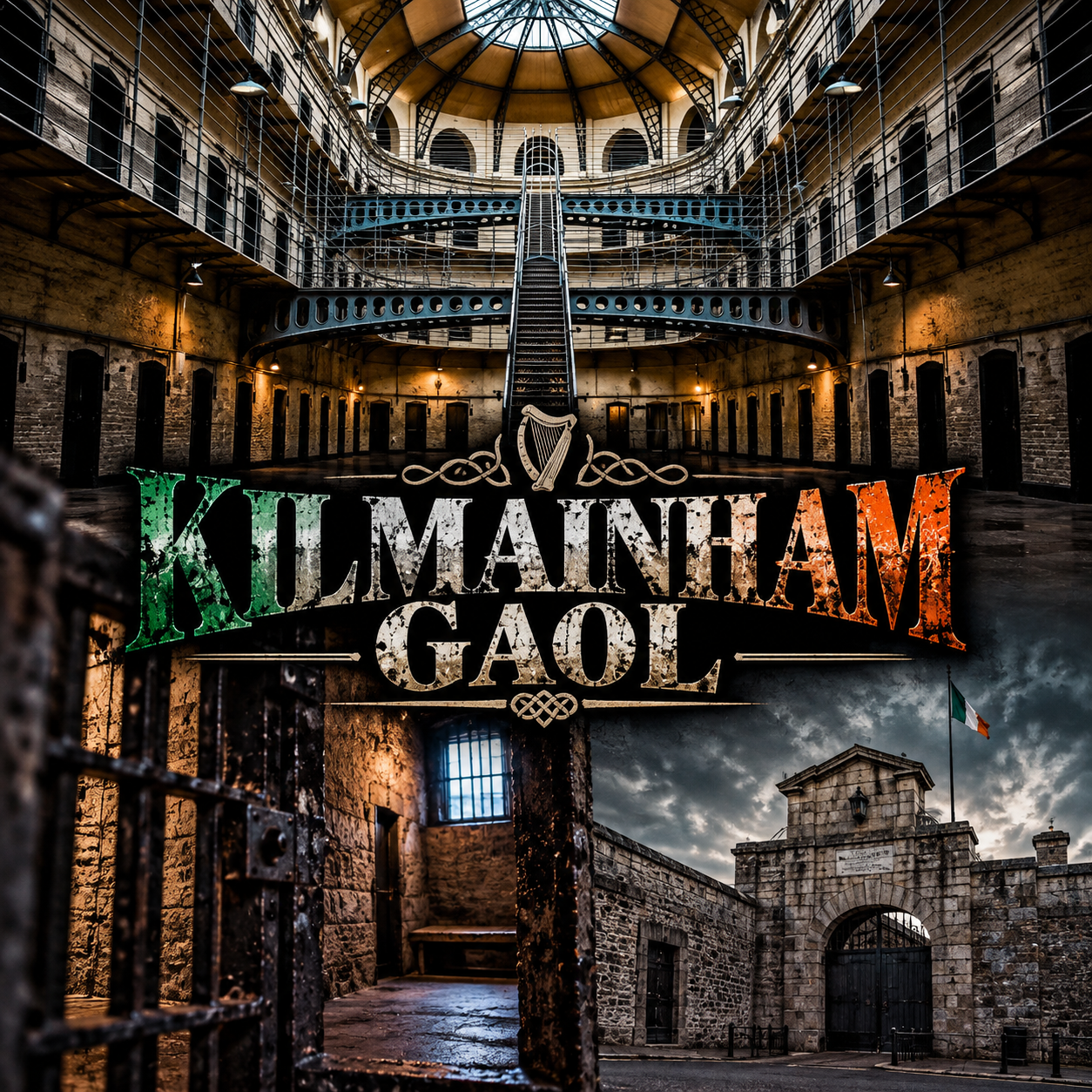
Join John Ambrose Martin of Soul-o Xperience as he explores the history, hauntings, and enduring legacy of Kilmainham Gaol, one of Ireland's most important and emotionally charged historical sites.
For generations, the prison stood as a symbol of punishment, sacrifice, and resistance. Thousands passed through its gates, from petty criminals and famine victims to some of the most influential figures in Irish history. Its walls witnessed suffering on a scale few buildings can claim, and the events that unfolded within them helped shape the future of an entire nation.
Today, Kilmainham Gaol stands preserved as a museum. Yet many visitors leave with the feeling that history has not entirely loosened its grip on the old prison.
History: The Prison That Witnessed a Nation's Struggle
When Kilmainham Gaol opened in 1796, it was intended to replace Dublin's overcrowded county prison. What emerged was a stark fortress of stone and iron where men, women, and children were confined under harsh conditions.
Prisoners often found themselves packed into cramped cells with little comfort and even less dignity. A single candle was expected to provide light for weeks at a time. Dampness crept through the walls, illness spread easily, and survival frequently depended upon luck as much as resilience.
Over time, the prison became intertwined with Ireland's political history.
Following the failed uprising of 1803, Robert Emmet spent his final days here before execution. The cells later held members of the Young Ireland movement, Fenian prisoners, and political activists whose names would become woven into the story of Irish independence.
Figures such as Charles Stewart Parnell and Éamon de Valera passed through its corridors. Yet it was the aftermath of the Easter Rising in 1916 that secured Kilmainham's place in Irish history.
Within the prison yard, leaders of the Rising faced execution by firing squad. Patrick Pearse, Thomas Clarke, Joseph Plunkett, James Connolly, and others spent their final hours here before meeting their fate.
Among the most poignant moments occurred in the prison chapel, where Joseph Plunkett married Grace Gifford just hours before his execution. The ceremony lasted only minutes, creating one of the most remembered and heartbreaking scenes in modern Irish history.
The prison eventually closed in 1924 following the Civil War. Though abandoned for a time, the building would later be restored and transformed into one of Ireland's most important historical landmarks.
Folklore: Grief Between the Walls
Some places collect stories.
Kilmainham seems to absorb them.
Perhaps it is impossible to walk through the prison without sensing the emotional weight carried by its corridors. Every cell door, every worn stone step, and every stretch of iron railing seems connected to a life once interrupted.
Over the decades, stories began emerging from workers, guides, and visitors who felt that certain areas of the gaol held more than history alone.
Nowhere is this more evident than the chapel.
The room where Joseph Plunkett and Grace Gifford exchanged vows is often described as one of the most emotionally charged locations in the prison. Several restoration workers reported unexplained occurrences while carrying out repairs, including lights switching on and off without explanation and a persistent feeling of being watched.
Others claimed the atmosphere could change without warning, becoming noticeably heavier despite no obvious cause.
The prison's old cells and underground areas have also become the focus of countless stories.
Footsteps are said to echo through empty corridors.
Doors seem to move when nobody is nearby.
Voices have reportedly been heard in places where silence should reign.
Whether these experiences are products of suggestion or something more unusual, they have become part of Kilmainham's story.
Paranormal Aftermath: When History Feels Alive
Among the many accounts associated with Kilmainham Gaol, one of the most frequently repeated concerns the restoration works carried out during the 1960s.
A painter working within the prison reportedly fled after an encounter he could not explain. According to the story, an unseen force threw him violently across a room. His equipment was left behind, and he never returned to finish the job.
Other workers described hearing footsteps running towards them through empty passageways, only for the sound to stop abruptly a few feet away. Moments later they reported feeling intense cold that seemed to appear from nowhere.
Visitors continue to share similar experiences.
Some speak of sudden temperature changes.
Others report hearing distant voices or catching brief glimpses of figures dressed in period clothing standing along the galleries before disappearing moments later.
Tour guides have spoken of unexplained touches and sensations, while guests occasionally describe feeling a wave of emotion in certain parts of the prison, particularly around the chapel and execution yard.
Unlike many reportedly haunted locations, the atmosphere of Kilmainham is rarely described as frightening.
Instead, it is often characterised as overwhelming.
There is a sense that the building carries the emotional imprint of the people who passed through it. The prison witnessed courage, sacrifice, despair, hope, resistance, and loss, sometimes all within the same day.
Whether the reported phenomena are paranormal or simply the effect of standing in a place so deeply connected to Ireland's past remains impossible to prove.
What is certain is that Kilmainham Gaol leaves an impression unlike anywhere else.
Many historic sites tell stories.
Kilmainham allows you to stand where those stories happened.
And sometimes that feels far more powerful than any ghost story.
If you found yourself alone in the prison chapel after dark, would you be thinking about the spirits said to walk its halls, or about the final goodbye that was once spoken beneath its roof?