
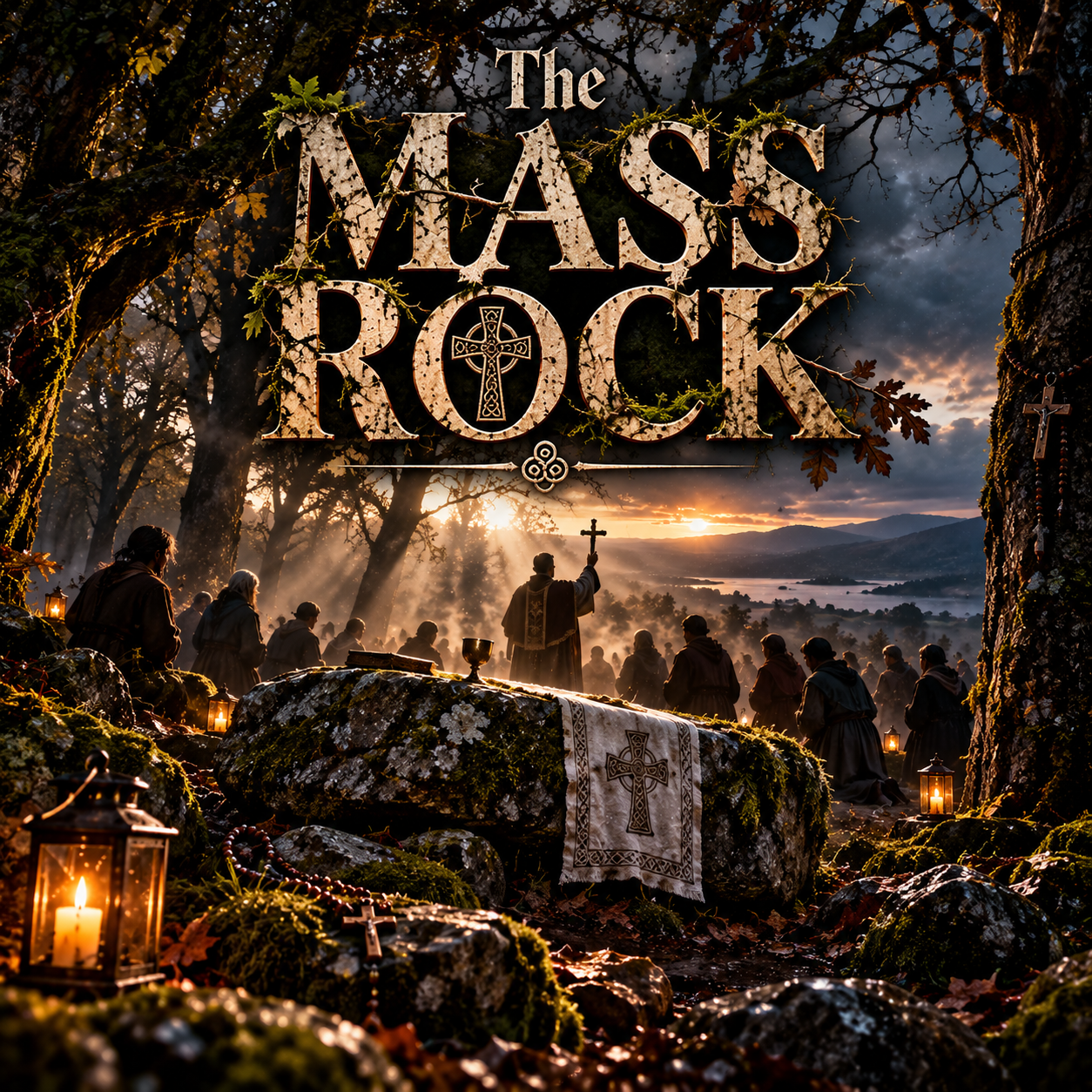
In the shadow of Ireland’s turbulent past lies a poignant symbol of resistance and faith: the Mass Rock, or Carraig an Aifrinn. These simple stones, often marked with a carved cross, served as clandestine altars during the 17th and early 18th centuries, when Catholic worship was driven underground by the oppressive Penal Laws.
Following Cromwell’s campaign and the enactment of the Penal Laws in 1695, Catholic religious practices were outlawed. Bishops were exiled, and priests were forced to register under the Registration Act of 1704. Those who refused faced arrest by hired priest hunters. In response, isolated rural locations became secret sanctuaries for worship, where Mass could be celebrated away from the eyes of the authorities.
The creation of a Mass Rock was a dangerous and defiant act. Stones were often salvaged from ruined churches and relocated to remote areas, where they were marked with a cross and used as makeshift altars. Services were never scheduled publicly; word was spread discreetly among parishioners. The risks were grave priests and attendees, including children, were sometimes executed if discovered. In some cases, victims were buried near the very rocks where they had worshipped.
One such Mass Rock can be found in Oughaval, County Laois. Visitors to this site often report a palpable sense of history and emotional weight. Standing before the stone, it is easy to imagine the courage and devotion of those who once gathered there, determined to preserve their faith in the face of persecution.
Over the years, many visitors including myself have experienced an eerie sensation at these sites: the feeling of being watched or followed. Some report waves of anxiety, oppression, or even panic. For others, there is a chilling sense of impending doom, so intense that they feel compelled to leave the site abruptly.
These experiences raise intriguing questions. Are visitors sensing the emotional residue of those who came before them? Could these feelings be explained by Stone Tape Theory?
Stone Tape Theory posits that intense emotional or traumatic events can imprint energy onto physical surroundings particularly stone. Under certain conditions, this energy may be "replayed," allowing sensitive individuals to experience echoes of the past. While not scientifically proven, the theory offers a compelling lens through which to view the lingering atmosphere of places like Oughaval’s Mass Rock.
Whether one believes in Stone Tape Theory or not, the Mass Rocks of Ireland remain powerful reminders of resilience, sacrifice, and the enduring human spirit.